




What's Happening?
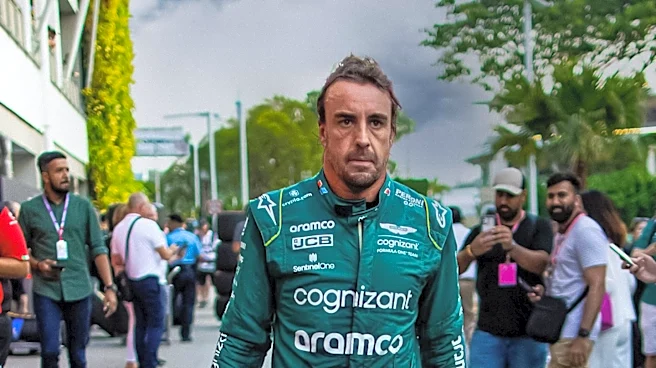
Fernando Alonso has revealed that Honda is developing a 'completely new project' for the 2027 Formula 1 season. This announcement comes after a challenging 2026 season for Aston Martin-Honda, which has faced significant issues with both its chassis and power
unit. The team's best result so far has been Alonso's eighth-place finish in the Bahrain Grand Prix, while Lance Stroll has yet to score any points. The Honda power unit has been plagued by severe vibrations, turbo lag, and drivability concerns, with recent ADUO upgrades failing to immediately resolve these problems. Alonso expressed his faith in the 2027 project, citing the 'completely new engine' currently undergoing dyno testing. He acknowledged the tough lessons learned during the current season, particularly after a double DNF at the Mexico City Grand Prix weekend, but remains optimistic about the team's future direction.
Why It's Important?
This development is crucial for Aston Martin's long-term competitiveness in Formula 1. A 'completely new project' from Honda for 2027 signals a significant investment and a potential reset in their power unit development, aiming to overcome the current reliability and performance issues. For Aston Martin, securing a competitive engine is paramount to challenging the top teams and justifying their substantial investments, including the acquisition of Adrian Newey. The struggles of the 2026 season highlight the critical importance of a robust power unit in modern F1. If Honda can deliver a significantly improved engine, it could elevate Aston Martin's performance, attracting top talent and sponsors. Conversely, continued power unit issues could jeopardize the team's ambitions and potentially lead to driver dissatisfaction, despite Alonso's current faith in the project.
What's Next?
The immediate focus for Aston Martin-Honda will be to mitigate the ongoing issues with the current power unit for the remainder of the 2026 season, although Alonso's comments suggest a forward-looking approach towards 2027. Honda will continue its development of the new engine on the dyno, with critical testing phases ahead to ensure reliability and performance. The team will also be working on chassis improvements, as Alonso noted the car is 'going in the right direction on the chassis side.' The performance of the new power unit in 2027 will be closely watched, as it will be a key indicator of Honda's commitment and capability to deliver a championship-contending engine. Stakeholders, including fans, media, and potential sponsors, will be observing whether the 'hard lessons' learned in 2026 translate into a more competitive package in the coming seasons.
Beyond the Headlines
The decision by Honda to embark on a 'completely new project' for 2027 reflects the intense technological arms race within Formula 1. It underscores the cyclical nature of success and failure in the sport, where even established manufacturers can face significant setbacks. This move also highlights the long lead times required for engine development, with decisions made years in advance impacting future performance. The pressure on Honda to deliver a competitive and reliable power unit is immense, not only for Aston Martin's success but also for Honda's reputation in motorsport. The challenges faced in 2026 could serve as a catalyst for innovation, pushing Honda's engineering teams to explore novel solutions. The success or failure of this new project will have broader implications for the manufacturer's future involvement in Formula 1 and its technological advancements in other sectors.