





What's Happening?
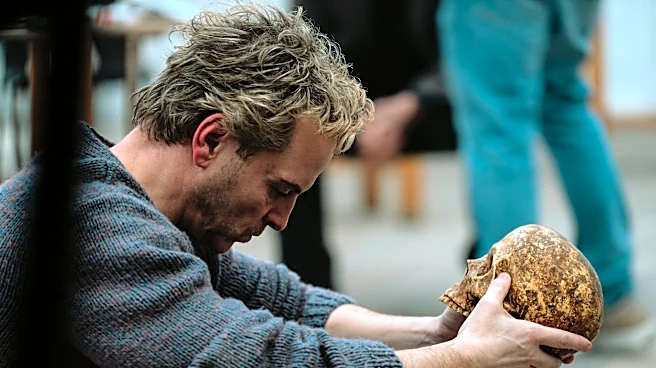
The film 'Elsinore' stars Andrew Scott as actor Ian Charleson, depicting his acclaimed 1989 performance as Hamlet at London's National Theatre while secretly battling AIDS. Directed by Australian stage impresario Simon Stone, the movie portrays Charleson's
determination to perform the role of a lifetime despite his deteriorating health. Joe Locke also appears in the film as Nicholas. The narrative highlights how Charleson stepped into the role after Daniel Day-Lewis unexpectedly left the production. The film emphasizes themes of perseverance, the creation of chosen families within the queer and theater communities, and the personal sacrifices made for one's craft. Despite some criticism regarding its filmmaking style, particularly its editing, 'Elsinore' is presented as an emotionally impactful and often humorous tribute to Charleson's life and career.
Why It's Important?
This film is important as it sheds light on a significant moment in theater history and the personal struggles faced by artists during the AIDS epidemic. It offers a poignant look at the resilience of individuals in the face of terminal illness and societal pressures, particularly concerning LGBTQ+ issues in the late 1980s. The movie's portrayal of Charleson's decision to remain in the closet, contrasted with the views of figures like Derek Jarman, reflects the complex challenges faced by public figures at the time. For the U.S. audience, 'Elsinore' contributes to the ongoing cultural conversation about the history of AIDS, LGBTQ+ rights, and the enduring power of art to transcend personal hardship. It also showcases the talent of actors like Andrew Scott, further solidifying his presence in American cinema.
What's Next?
As 'Elsinore' is now in theaters, its immediate future involves its theatrical run and potential for awards season recognition, particularly given its emotional depth and strong performances. The film's themes of perseverance and the impact of the AIDS epidemic may spark further discussions and educational initiatives about this period in history. Its critical reception, despite some technical critiques, suggests it could become a notable entry in the canon of films addressing historical LGBTQ+ experiences and the arts. Audiences can anticipate continued discourse around the film's portrayal of Charleson's legacy and the broader implications of his story.
Beyond the Headlines
Beyond its immediate narrative, 'Elsinore' delves into deeper implications concerning the ethical responsibilities of artists and public figures, especially when their personal lives intersect with their professional personas. The film implicitly raises questions about the pressure to conform versus the desire for authenticity, particularly in a time when being openly gay carried significant social and professional risks. The movie also touches on the often-overlooked sacrifices made by performers, highlighting the physical and mental toll that demanding roles can take, even in the face of life-threatening illness. It serves as a cultural artifact that not only commemorates Ian Charleson but also reflects on the broader societal attitudes and challenges of the late 20th century.