








What's Happening?
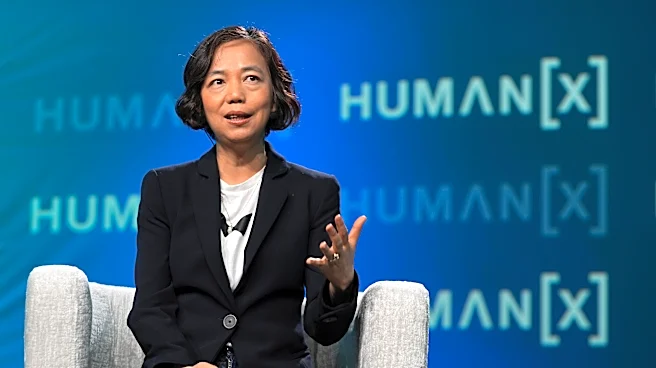
AI strategist Sol Rashidi, who serves as the chief strategy officer at Cyera and a senior fellow at Harvard Kennedy School, has decided to reduce the number of AI agents she employs due to the excessive time spent managing them. Rashidi initially used
four AI virtual assistants designed to autonomously complete tasks, but found herself spending more time supervising these agents than performing productive work. This phenomenon, known as 'botsitting,' involves workers dedicating significant hours to feeding AI context, debugging errors, and cleaning up mistakes. A report by Glean highlights that white-collar workers spend an average of 6.4 hours weekly on such tasks, which can detract from overall productivity. Rashidi's experience underscores the challenges of integrating AI into workflows without compromising efficiency.
Why It's Important?
The situation faced by Rashidi reflects a broader 'productivity paradox' where the anticipated efficiency gains from AI are not fully realized. This paradox is significant for businesses investing in AI technologies with the expectation of reducing workload and increasing productivity. The need for constant supervision of AI agents can negate the intended benefits, leading to increased operational costs and inefficiencies. Companies may need to reassess their automation strategies and consider the balance between human oversight and AI autonomy. The experience also highlights the importance of critical thinking and judgment in deploying AI solutions, as blind reliance on technology can lead to suboptimal outcomes.
What's Next?
Organizations may need to reevaluate their approach to AI integration, focusing on strategic deployment rather than automation for its own sake. This could involve investing in training for employees to better manage AI tools and developing frameworks to assess the effectiveness of AI implementations. As companies like Microsoft continue to explore AI-human collaboration, the industry might see a shift towards more nuanced and context-aware AI systems that require less human intervention. Additionally, there may be increased scrutiny on the promises of AI vendors and a push for more transparent reporting on AI performance metrics.