






What's Happening?
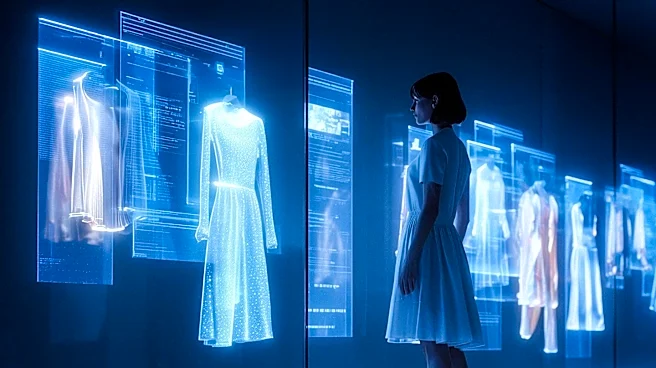
The fashion industry is increasingly adopting AI fashion models for various applications, including product catalog images, digital campaigns, social media content, and virtual styling. This shift allows brands to generate visual content without the need
for traditional photoshoots, potentially reducing production costs and accelerating content creation. AI fashion models come in two main types: fully synthetic models, which are entirely computer-generated, and digital replicas, which reproduce or modify a real person's likeness. While synthetic models are fictional, digital replicas raise concerns about consent and the commercial use of an individual's image. A Reuters investigation in October 2026 highlighted that fashion companies are exploring AI-generated imagery to cut costs, but also noted concerns regarding digital replicas and the future of modeling work. For instance, SCAYLE Studios reportedly generated 190,000 outfits in a month for 130 clients using AI, demonstrating the technology's scalability.
Why It's Important?
The integration of AI fashion models signifies a significant transformation in the fashion industry's production processes, with profound implications for human talent and ethical considerations. While AI offers benefits such as faster content production, lower costs (potentially saving 90% or more on certain imagery models), and more flexible marketing, it also poses risks to the livelihoods of models, photographers, retouchers, stylists, and studio staff. Research from Cornell University's ILR School in 2025 indicated that generative AI could increase models' vulnerability to unauthorized image use and contribute to employment insecurity. The distinction between synthetic models and digital replicas is crucial, as the latter raises complex legal and ethical questions regarding identity rights, compensation, and consent. The potential for AI to generate images that do not reflect real human proportions also raises concerns about reinforcing narrow beauty standards and creating misleading consumer expectations about clothing fit.
What's Next?
The fashion industry will likely continue to explore and expand the use of AI fashion models, particularly for repetitive commercial image production. However, the future will also involve addressing the ethical and legal challenges associated with this technology. Clear contractual agreements will become increasingly vital, defining whether a model's likeness can be used to create a digital replica, the scope and duration of its use, and whether additional compensation is required for future applications or AI training. Legislation, such as New York's Fashion Workers Act, which took effect in June 2025 and introduced protections for models' digital replicas, may serve as a precedent for other jurisdictions. Brands will need to balance the efficiency and cost-saving benefits of AI with the need for consumer transparency, accurate product representation, and the protection of human talent's rights. A hybrid approach, combining real models with AI-assisted editing for approved variations, may become a common strategy.
Beyond the Headlines
The rise of AI fashion models extends beyond mere technological advancement, touching upon fundamental questions of human creativity, labor rights, and the nature of authenticity in a digital age. The ability of AI to generate images that may not accurately represent garment fit, color, or texture highlights a potential disconnect between virtual presentation and physical reality, which could erode consumer trust if not managed carefully. Furthermore, the ethical concerns surrounding unrealistic body standards perpetuated by AI-generated images underscore the industry's ongoing responsibility to promote diverse and healthy representations. The debate over AI replacing human models also reflects a broader societal discussion about automation's impact on various professions, prompting a re-evaluation of the unique value that human expression, personality, and physical performance bring to creative fields. Ultimately, the fashion industry's adoption of AI will shape not only its operational efficiency but also its cultural influence and its commitment to ethical practices.