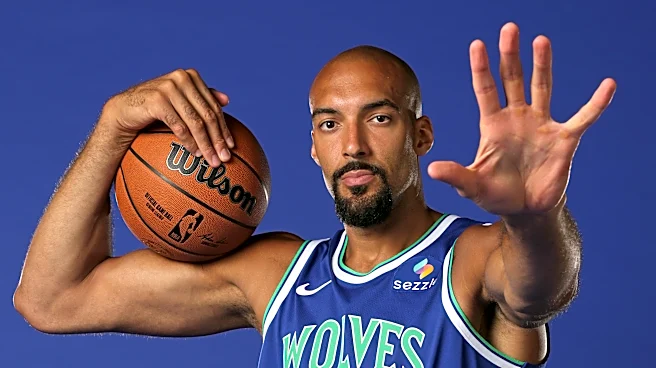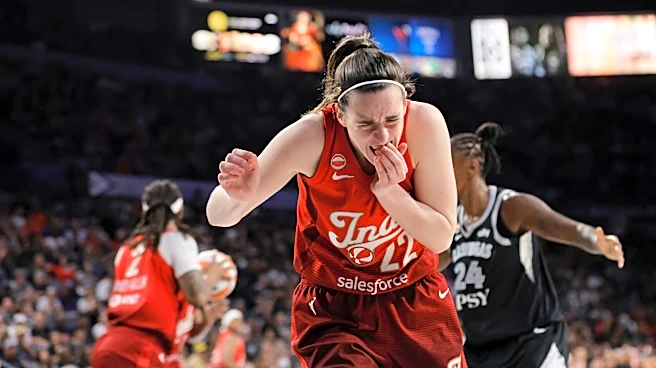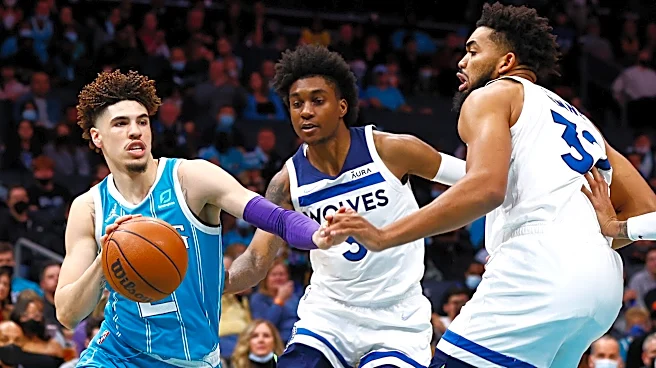




What's Happening?
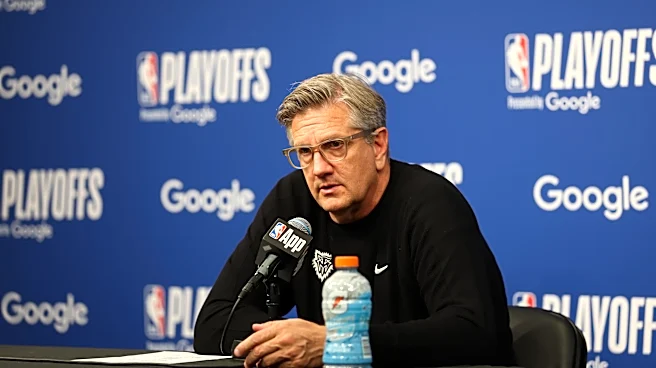
Chris Finch, head coach of the Minnesota Timberwolves, has publicly voiced his strong opposition to flopping in the NBA. Finch explicitly stated that the Timberwolves do not teach flopping as part of their team strategy. He welcomed the NBA's renewed
focus on addressing this issue, expressing hope that the league will take decisive action to prevent players from being rewarded for simulating fouls. Finch's comments were made during a discussion that also touched upon other NBA news, including Bam Adebayo's performance and A'Ja Wilson's game against Caitlin Clark. His remarks underscore a growing sentiment among some coaches and fans that flopping detracts from the integrity and competitive spirit of the game.
Why It's Important?
Coach Finch's stance against flopping is significant because it highlights a persistent issue within the NBA that impacts game flow, officiating, and fan perception. Flopping, where players exaggerate contact to draw fouls, can lead to unfair advantages, disrupt the rhythm of games, and frustrate viewers. By publicly condemning the practice and stating his team does not engage in it, Finch is advocating for a cleaner, more authentic style of play. His support for the league's efforts to curb flopping could encourage other coaches and organizations to adopt similar policies, potentially leading to a league-wide reduction in the practice. This could improve the quality of play, enhance the credibility of officiating, and ultimately make the game more enjoyable for fans who prefer to see genuine competition rather than theatrical embellishments.
What's Next?
Following Coach Finch's comments, the NBA is likely to continue its efforts to address flopping through various measures, which could include increased fines, stricter enforcement of existing rules, or even new penalties. The league's renewed focus suggests a commitment to maintaining the integrity of the game. Other coaches and players may be prompted to re-evaluate their approach to drawing fouls, potentially leading to a shift in on-court behavior. Fans and media will be closely watching how effectively the league implements its anti-flopping initiatives and whether there is a noticeable reduction in the practice during upcoming games. The ongoing dialogue around flopping, fueled by figures like Coach Finch, will continue to shape the conversation about sportsmanship and fair play in professional basketball.
Beyond the Headlines
The issue of flopping extends beyond mere rule enforcement; it touches upon the ethical dimensions of competition and the broader culture of professional sports. Finch's remarks implicitly challenge the notion that 'anything goes' in pursuit of victory, advocating for a standard of conduct that prioritizes genuine athletic effort over deceptive tactics. This conversation can influence how young athletes are coached and how sportsmanship is valued at all levels of basketball. Furthermore, the league's response to flopping reflects its commitment to preserving the authenticity of the game in an era where sports entertainment is increasingly scrutinized. The success or failure of anti-flopping measures could set a precedent for how other professional sports leagues address similar issues of simulation and gamesmanship, impacting the global perception of fair play in competitive athletics.