


What's Happening?
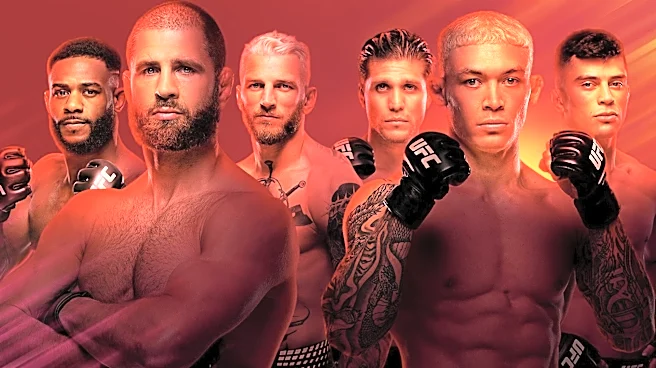
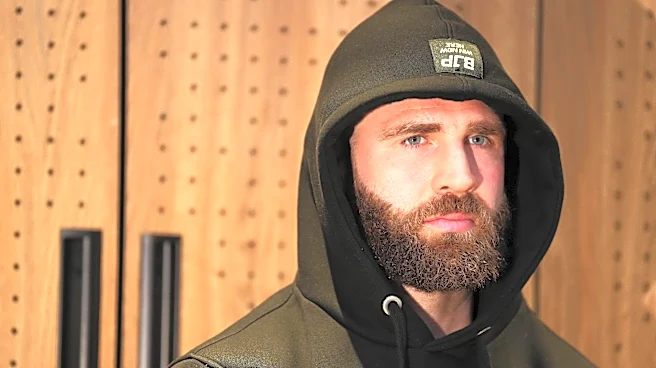
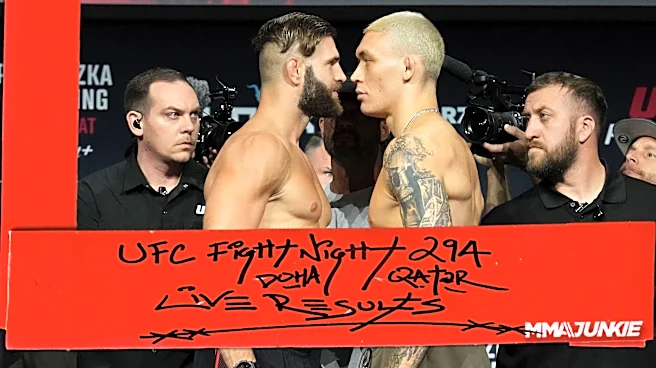
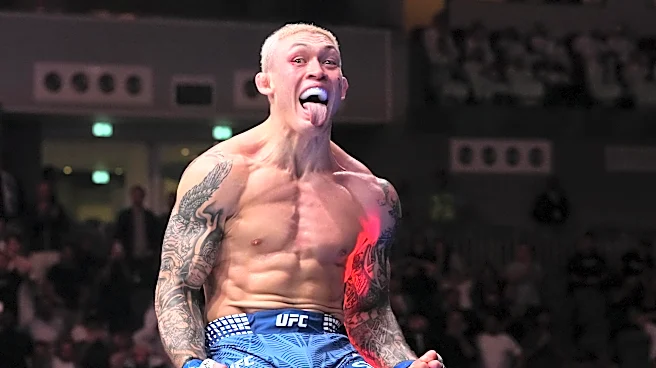
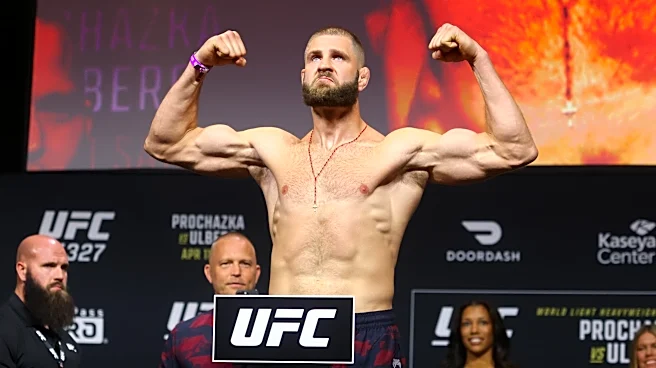
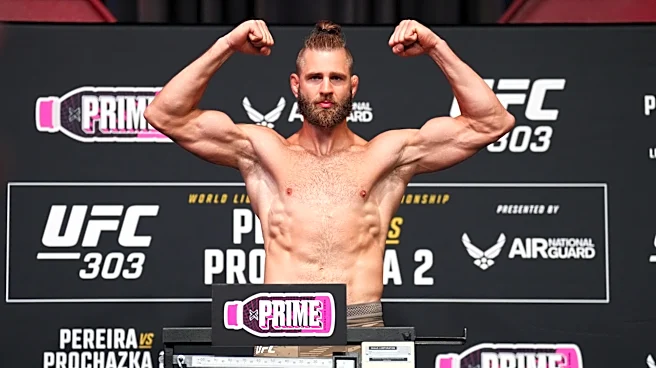
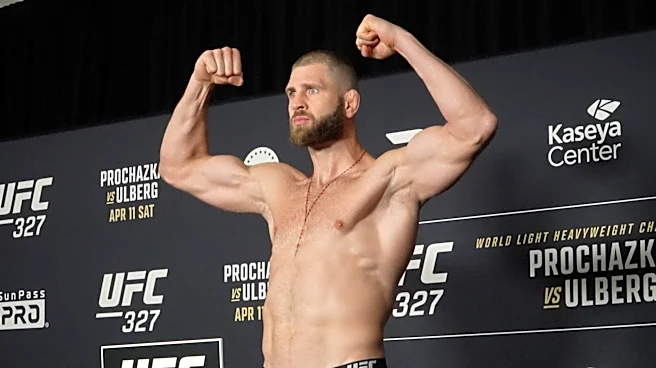
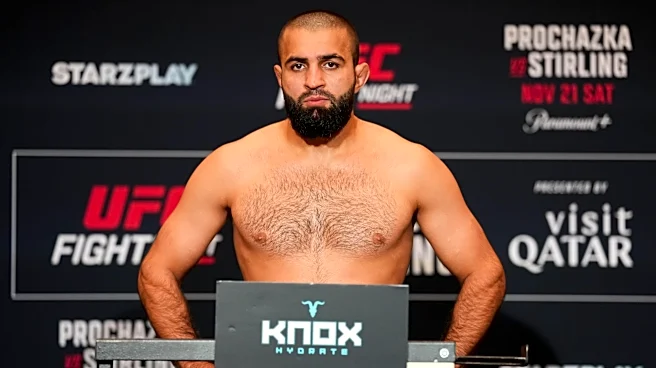
UFC Fight Night in Qatar delivered significant results, highlighted by Navajo Stirling's second-round knockout of former champion Jiri Prochazka. This victory positions Stirling closer to a light heavyweight title shot, capping off a dominant 2026 with
four stoppage wins. Stirling's performance, including a prior win against Jan Blachowicz, showcases his speed and power. The event also saw Kevin Vallejos, a 24-year-old from Argentina, extend his winning streak to eight, outpointing former bantamweight champion Aljamain Sterling. Vallejos's tactical display and call-out of featherweight king Alexander Volkanovski suggest he is ready for a title challenge. Additionally, Brian Ortega announced his retirement after a decision loss to Dan Hooker, citing inactivity and injuries, while Kyoji Horiguchi secured a unanimous decision over Asu Almabayev, keeping him in the flyweight title mix.
Why It's Important?
The outcomes of UFC Fight Night in Qatar have significant implications for the UFC's light heavyweight and featherweight divisions. Navajo Stirling's ascent creates a unique challenge for the UFC, as he is a teammate of current light heavyweight champion Carlos Ulberg, and both have expressed reluctance to fight each other. This situation could force the UFC to navigate a complex title picture, potentially impacting future fight bookings and championship trajectories. Kevin Vallejos's rapid rise in the featherweight division signals a new contender for Alexander Volkanovski, promising exciting matchups and a potential shift in the division's hierarchy. Brian Ortega's retirement marks the departure of a popular, albeit often injured, fighter, which could affect fan engagement and the competitive landscape of the lightweight division. Kyoji Horiguchi's continued success ensures he remains a relevant figure in the flyweight division, adding depth to the talent pool.
What's Next?
Following his decisive victory, Navajo Stirling is expected to be a top contender for the light heavyweight title. The UFC and City Kickboxing head coach Eugene Bareman will need to address the potential conflict of Stirling fighting his teammate, Carlos Ulberg, for the championship. This could lead to a temporary holding pattern or a strategic move to have one fighter compete in a different weight class. Kevin Vallejos's call-out of Alexander Volkanovski suggests a featherweight title fight could be on the horizon, potentially in 2027, depending on Volkanovski's schedule and the UFC's matchmaking decisions. Jiri Prochazka's future is uncertain after his knockout loss; he may consider a move to middleweight or heavyweight, or a significant re-evaluation of his fighting style to prolong his career. Kyoji Horiguchi's win positions him for a potential flyweight title shot in 2027, indicating continued competition in that division.
Beyond the Headlines
The emergence of young talent like Navajo Stirling and Kevin Vallejos highlights a generational shift within the UFC, bringing fresh faces and new dynamics to established divisions. Stirling's situation with his teammate Ulberg also raises ethical and strategic questions for fight promotions regarding teammates competing for titles, potentially influencing how such scenarios are managed in the future. The retirement of a veteran like Brian Ortega, who cited childhood anger as a motivator, offers a glimpse into the psychological toll and personal growth experienced by professional fighters. Prochazka's repeated knockout losses underscore the physical risks inherent in combat sports and the critical decisions fighters must make about their long-term health and career sustainability. These developments collectively shape the narrative of the UFC, influencing fan interest, fighter careers, and the sport's competitive integrity.