
What's Happening?
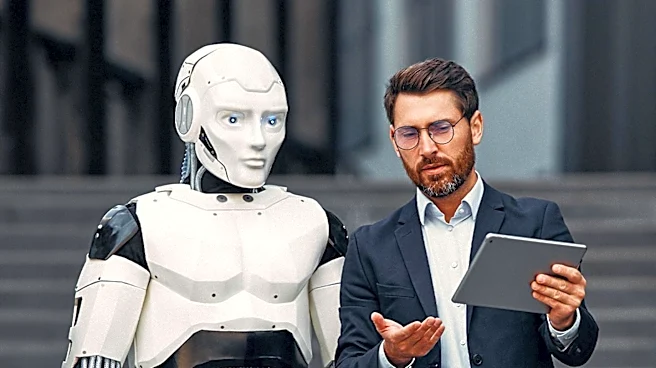
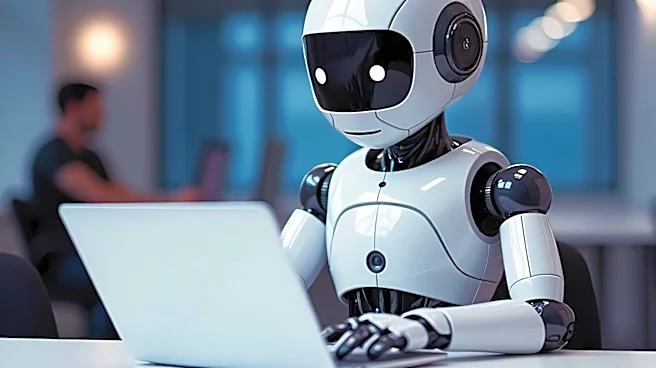
Xpeng, a Chinese electric vehicle manufacturer, has publicly showcased its Iron humanoid robot in China. The company's co-president, Brian Gu, announced that the robot is slated to begin training as a store assistant in Xpeng's retail locations in the first
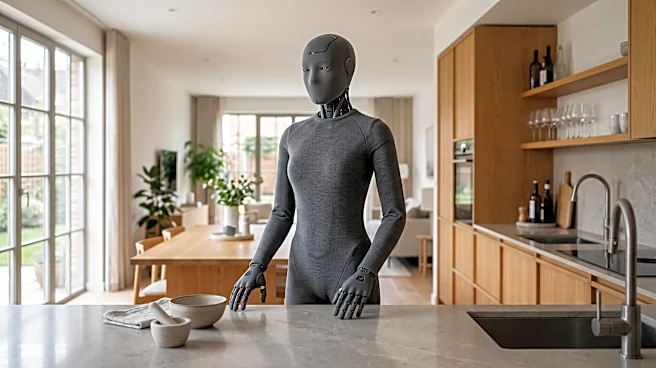
quarter of next year, with mass production targeted for January. Following its retail deployment, Xpeng aims to introduce the Iron robot into home settings within one to two years. Gu estimates the robot's consumer price in China will range from approximately $18,000 to $46,500, aligning with the cost of Xpeng's electric vehicles. The company has set an ambitious goal to sell tens of thousands of these humanoid robots in 2027, which Gu considers a pivotal year for scaling and commercializing the robotics business. Xpeng is expanding its focus beyond EVs to include AI, autonomous driving, and humanoid robots, with Gu suggesting that the robotics sector could be more profitable than the automotive business.
Why It's Important?
The introduction of Xpeng's Iron humanoid robot signifies a growing trend among major technology and automotive companies to diversify into advanced robotics and artificial intelligence. This move by Xpeng, a prominent EV manufacturer, highlights the increasing convergence of AI, robotics, and consumer technology. If Xpeng successfully commercializes its humanoid robots for retail and home use, it could significantly impact the labor market by automating tasks traditionally performed by humans, particularly in customer service and domestic chores. The projected price point, comparable to an EV, suggests a strategy to position these robots as high-value consumer goods, potentially creating a new market segment. The company's ambition to sell tens of thousands of units by 2027 indicates a belief in the scalability and profitability of humanoid robotics, which could attract further investment and accelerate development in the sector globally. This development could also intensify competition with other companies, such as Tesla, that are also pursuing humanoid robot technology.
What's Next?
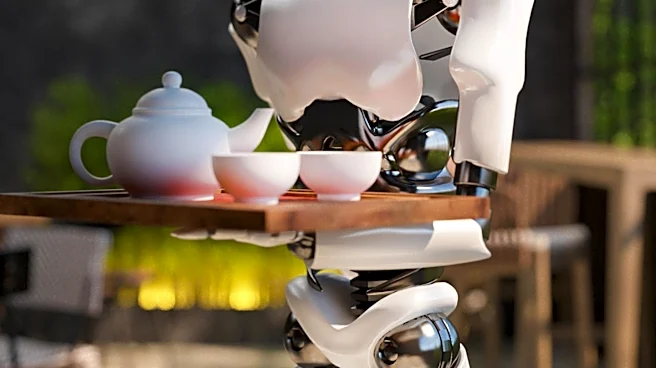
Xpeng plans to initiate the training of its Iron humanoid robot as a store assistant in its retail outlets during the first quarter of next year, with mass production scheduled to commence in January. The company aims to deploy these robots in home settings within one to two years after their retail debut. Brian Gu has indicated that 2027 will be a critical year for scaling up and commercializing the robotics business, with targets to sell tens of thousands of units. This timeline suggests that consumers could see Xpeng's humanoid robots in practical applications relatively soon. The success of these initial deployments will likely influence public perception and adoption rates, as well as Xpeng's future investment in and development of its robotics division. The company's ability to overcome technical challenges and address public skepticism regarding humanoid robots will be crucial for its long-term success in this emerging market.
Beyond the Headlines
The emergence of humanoid robots like Xpeng's Iron raises profound ethical and societal questions. While the immediate applications focus on retail assistance and domestic chores, the long-term implications of general-purpose humanoid robots in everyday life are vast. Concerns about job displacement, the nature of human-robot interaction, and the potential for autonomous systems to make decisions in complex environments will become more pressing as these technologies advance. The 'ominous' perception noted by some observers, drawing parallels to dystopian science fiction, underscores a broader societal unease about the rapid progress in AI and robotics. Furthermore, the legal and regulatory frameworks for robots operating freely in domestic settings are largely undeveloped, posing significant challenges for widespread adoption. The profitability potential highlighted by Brian Gu suggests a strong economic incentive for companies to push these boundaries, potentially leading to a future where humanoid robots are a common feature of homes and workplaces, fundamentally altering human society and economy.