


What's Happening?
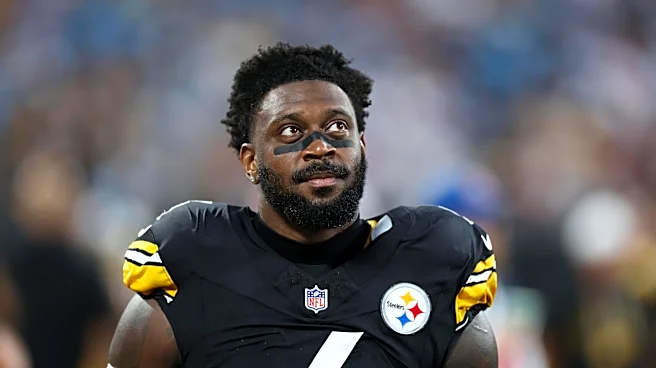
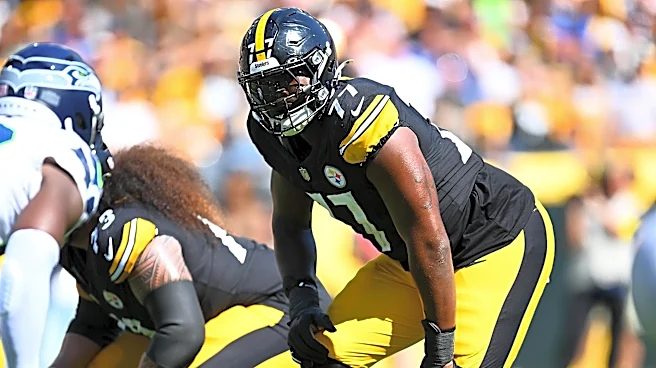
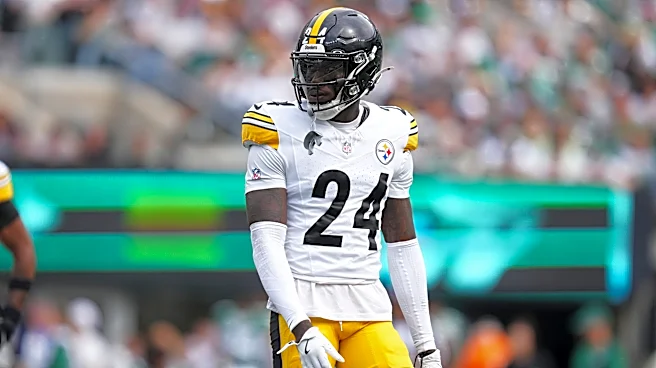
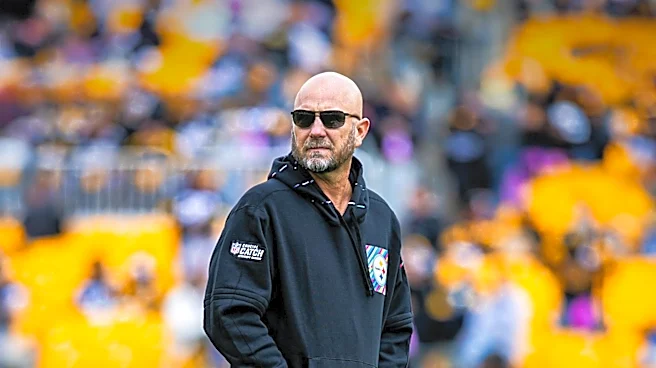
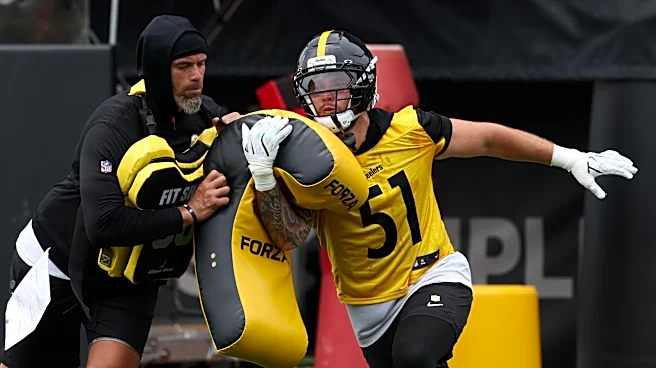
Joey Porter Jr., a player for the Pittsburgh Steelers, has reportedly not made a favorable impression on the team's new coaching staff due to his decision to hold out during spring practices. According to Gerry Dulac, Porter was present but did not participate
in practice, a move that is common among players seeking new contracts. This situation is complicated by the fact that the Steelers have a new coaching staff, unlike previous holdouts by players like Cameron Heyward and T.J. Watt, who had established relationships with the team. Despite this, Porter is expected to receive a significant contract, as the team cannot afford to lose him. The market for cornerbacks is rapidly inflating, with recent contracts for players like Denzel Ward setting high benchmarks. However, the Steelers reportedly do not view Porter as a top-five cornerback, which could lead to challenging contract negotiations.
Why It's Important?
The situation with Joey Porter Jr. highlights the complexities of contract negotiations in the NFL, especially with a new coaching staff. The Steelers' reluctance to view Porter as a top-tier cornerback could impact his contract value, despite the rising market for his position. This scenario underscores the broader trend of players leveraging holdouts to negotiate better contracts, a strategy that can be risky without established rapport with team management. The outcome of these negotiations could influence future contract strategies for players and teams, particularly in a league where salary caps and market values are constantly evolving.
What's Next?
As the Steelers and Joey Porter Jr. navigate contract negotiations, the potential for a franchise tag looms if an agreement isn't reached. This could delay a long-term deal and impact Porter's future with the team. The Steelers' management will need to balance their valuation of Porter with the market trends and the player's expectations. The outcome of these negotiations could set a precedent for how the team handles similar situations in the future, especially with other players who may seek to leverage holdouts for better contracts.