









What's Happening?
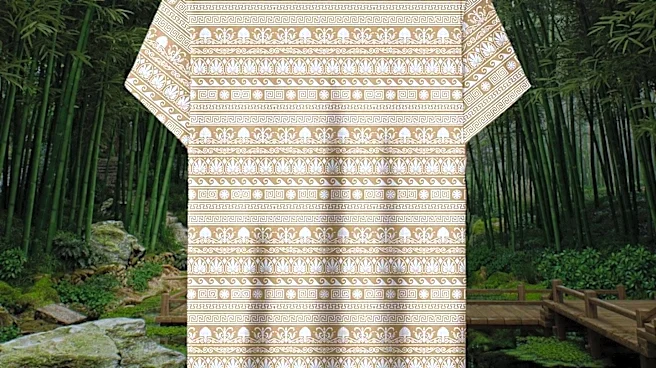
Issey Miyake has unveiled its latest IM MEN collection, titled 'In Praise of Bamboo Shadows,' which draws inspiration from the Japandi style—a fusion of Japanese minimalism and Scandinavian design. The collection was showcased at the Césure cultural centre,
featuring around 40 models in fluid, oversized ensembles. The designs predominantly use muted tones such as white, black, brown, sage green, aniseed, and fir green, with occasional appearances of royal blue and fuchsia pink. The collection's theme revolves around bamboo, with patterns and techniques that mimic the lightness and shadows of bamboo foliage. Notable pieces include a long white coat with black shadows and tops that resemble assembled bamboo leaves. The collection is directed by Sen Kawahara, Yuki Itakura, and Nobutaka Kobayashi from the Miyake Design Studio.
Why It's Important?
The collection highlights the growing influence of Japandi style in fashion, which combines the simplicity and clean lines of Japanese design with the functional and cozy aesthetics of Scandinavian interiors. This trend reflects a broader cultural shift towards minimalism and sustainability in design, appealing to consumers seeking elegance and simplicity. The use of bamboo as a central theme not only emphasizes the aesthetic appeal but also aligns with sustainable fashion practices, as bamboo is a renewable resource. This collection could influence other designers to explore similar themes, potentially impacting fashion trends and consumer preferences globally.
What's Next?
As the collection gains attention, it may inspire other fashion houses to incorporate elements of Japandi style and sustainable materials into their designs. The focus on bamboo and minimalism could lead to collaborations with eco-friendly brands and initiatives. Additionally, the collection's success might encourage Issey Miyake to further explore and expand on this theme in future collections, potentially setting a precedent for other designers to follow.
Beyond the Headlines
The collection's emphasis on bamboo and Japandi style may also have cultural implications, promoting a deeper appreciation for Japanese and Scandinavian design philosophies. This could lead to increased interest in these cultures and their design principles, influencing not only fashion but also interior design and architecture. The collection's success might also spark discussions on the importance of sustainability in fashion, encouraging consumers and designers alike to consider the environmental impact of their choices.