








What's Happening?
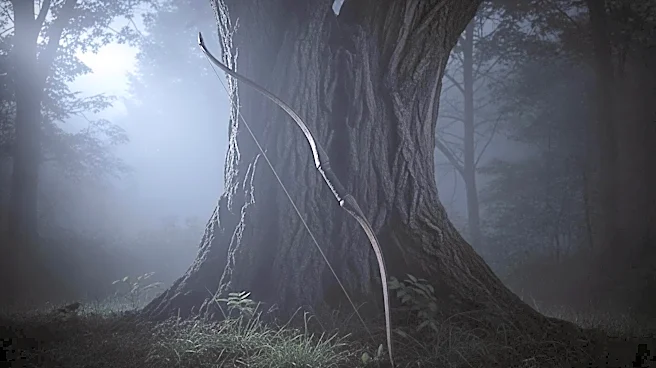
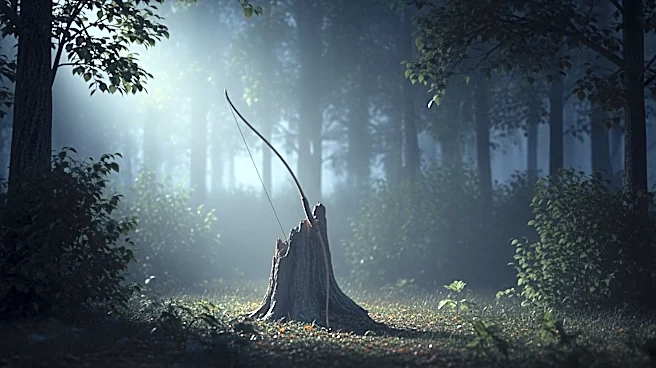
The film 'The Death of Robin Hood,' directed by Michael Sarnoski and starring Hugh Jackman, presents a darker, more violent interpretation of the classic Robin Hood tale. Based on the English ballad 'Robin Hood’s Death,' the movie diverges from traditional
portrayals by depicting Robin Hood as an amoral villain rather than a heroic figure. The narrative begins with Robin Hood living as a reclusive outlaw in Britain, clad in animal furs and sporting a rugged appearance. The plot initially suggests a familiar 'unlikely father' arc but quickly subverts expectations with its brutal violence and lack of redemptive themes. The film challenges audiences to reconsider the character's motivations, suggesting that survival and greed, rather than altruism, drive his actions. The story takes a contemplative turn in its latter half, focusing on Robin's introspection and mortality as he seeks refuge in a community led by nuns.
Why It's Important?
This film represents a significant shift in how classic characters are portrayed in modern cinema, reflecting a broader trend of reimagining beloved figures with more complex, often darker narratives. By stripping Robin Hood of his traditional heroism, the film invites viewers to engage with themes of morality, redemption, and the human condition. This approach may influence future adaptations of folklore and historical figures, encouraging filmmakers to explore more nuanced character studies. The film's production by A24, known for its support of unconventional storytelling, highlights the growing appetite for films that challenge traditional narratives and audience expectations. This trend could impact the types of stories that receive funding and distribution, potentially reshaping the landscape of mainstream cinema.
What's Next?
As 'The Death of Robin Hood' reaches audiences, it may spark discussions about the portrayal of historical and fictional characters in media. The film's reception could influence future projects, encouraging filmmakers to explore similar reinterpretations of classic tales. Additionally, the film's success or failure at the box office may impact the willingness of studios to invest in unconventional narratives. Audience reactions and critical reviews will likely play a crucial role in determining the film's legacy and its influence on the industry. If successful, this film could pave the way for more experimental storytelling in Hollywood, challenging traditional genre boundaries and audience expectations.
Beyond the Headlines
The film's darker portrayal of Robin Hood raises questions about the ethical implications of reimagining historical and fictional figures. By presenting Robin Hood as a morally ambiguous character, the film challenges viewers to reconsider the nature of heroism and the complexities of human behavior. This approach may prompt discussions about the responsibility of filmmakers to balance creative freedom with respect for cultural icons. Additionally, the film's focus on introspection and mortality highlights the potential for cinema to explore deeper philosophical themes, encouraging audiences to reflect on their own values and beliefs. This shift towards more introspective storytelling could influence the types of narratives that resonate with contemporary audiences, potentially leading to a broader acceptance of films that prioritize character development over action-driven plots.