





What's Happening?
Costco Wholesale (NasdaqGS:COST) has reported robust fiscal 2026 results, leading its board to approve a higher regular dividend for shareholders. This decision signals increased ongoing cash returns from the business. Concurrently, management has unveiled
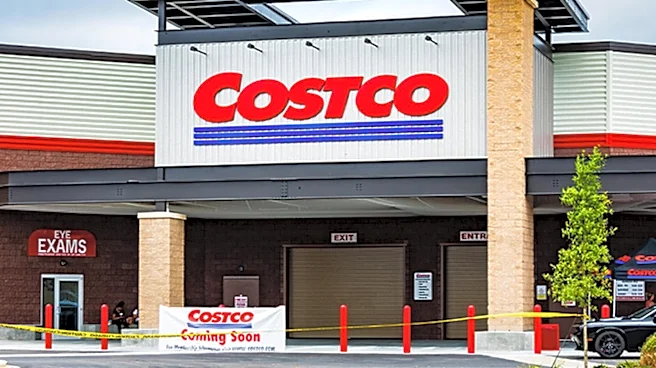
a substantial capital spending plan for fiscal year 2027, allocating approximately $7.5 billion. This significant investment is primarily earmarked for the opening of around 30 net new warehouses and the expansion of existing capacity across North America, Europe, and Asia. The company's strategy focuses on leveraging its membership-only warehouse club model to spread its low-frills, bulk-buying approach more widely. The increased dividend, along with a previously announced $30 special payout and a new $4 billion share buyback plan, underscores management's confidence in Costco's cash generation capabilities to support both growth initiatives and shareholder returns.
Why It's Important?
This development is significant for investors and the retail sector as it highlights Costco's continued commitment to growth and shareholder value. The increased regular dividend, coupled with the substantial capital expenditure plan, suggests that Costco anticipates sustained profitability and strong cash flow in the coming years. The $7.5 billion investment in new warehouses and capacity expansion indicates an aggressive strategy to capture market share and deepen its global footprint. This expansion could intensify competition within the retail industry, particularly for other warehouse clubs and large-format retailers. For consumers, the addition of new warehouses means greater access to Costco's bulk-buying model and potentially more competitive pricing in new markets. The company's ability to maintain its payout ratio while funding significant expansion will be a key indicator of its financial health and operational efficiency.
What's Next?
Costco's immediate next steps involve the execution of its ambitious fiscal year 2027 capital spending plan, which includes the development and opening of approximately 30 new warehouses. The success of this expansion will depend on various factors, including site selection, construction timelines, and market acceptance in new regions. Investors will closely monitor the impact of this increased capital expenditure on the company's financial performance, particularly its cash flow and return on investment. The company's narrative hinges on its ability to convert higher capital spending, growing digital and delivery channels, and a stronger executive membership base into sustained, profitable warehouse traffic and spending. Future financial reports will provide insights into the effectiveness of these strategies and whether they can offset potential challenges such as slower total member additions and category-specific pressures.
Beyond the Headlines
The substantial capital investment and increased dividend payout by Costco reflect a broader trend in mature retail companies balancing growth with shareholder returns. This strategy tests the assumption that a membership-heavy model can continuously generate enough cash to fund both aggressive expansion and significant capital returns. A deeper implication lies in how Costco plans to sustain membership growth, especially executive memberships, which are crucial for its fee income. The company's focus on digital and delivery channels, alongside physical expansion, suggests an adaptation to evolving consumer shopping habits. The long-term success of this strategy will depend on Costco's ability to maintain its low-frills, bulk-buying appeal while integrating modern retail conveniences. This approach could set a precedent for how other large retailers manage their growth and capital allocation in a dynamic market environment.