



What's Happening?
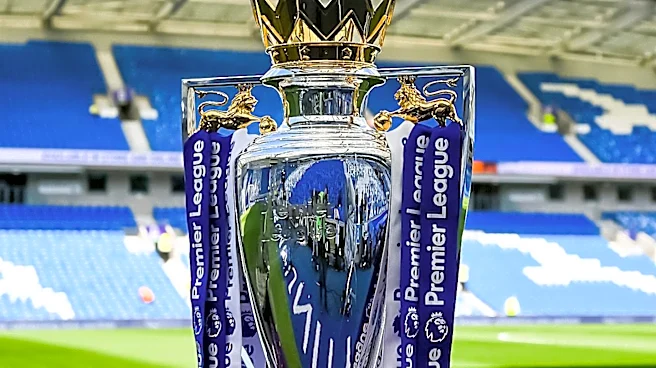
The Premier League is requesting its member clubs to provide legal protection for its chief executive, Richard Masters, and other board directors. This move comes as Manchester City's sponsors, including Etihad Airways and Etisalat, are reportedly considering
individual lawsuits against these officials. Manchester City was found guilty in September of 114 breaches of Premier League financial rules, specifically for 'artificially inflating' their finances through 'sham' sponsorship deals between 2009 and 2018. The club is currently appealing this verdict. Etihad Airways immediately responded to the ruling by stating it was exploring legal action, denying any involvement in improper commercial arrangements and noting that the Premier League did not contact them during its proceedings. Etisalat has also declared the findings related to them as 'entirely false and defamatory' and is exploring its legal options. The Premier League board, which includes Masters, Alison Brittain, Mai Fyfield, Dharmash Mistry, and Matthew Ryder KC, currently lacks indemnity protection against legal action from third parties like club sponsors.
Why It's Important?
This development highlights the significant financial and legal ramifications stemming from the Premier League's disciplinary action against Manchester City. The potential for corporate defamation claims, estimated to run into billions of pounds, could have a substantial impact on the league's financial stability and operational integrity. If the Premier League clubs agree to collectively cover legal costs and damages, it would effectively distribute the financial burden across all teams, potentially affecting their individual budgets and future investments. This situation also underscores the complex relationship between sports governing bodies, their member clubs, and major corporate sponsors. The outcome of this request for legal protection could set a precedent for how similar disputes are handled in professional sports leagues, influencing the willingness of officials to pursue investigations against powerful clubs and their commercial partners. The integrity of the competition, which the Premier League states it is committed to upholding, is at the core of this dispute, with implications for fairness and transparency in football finance.
What's Next?
The Premier League is scheduled to convene with its 20 clubs in London on Thursday, November 19, to address the issue of legal protection. During this meeting, the league will seek agreement for clubs to jointly cover legal costs and any damages that may arise from lawsuits initiated by Manchester City's sponsors. For the proposal to pass, at least 14 clubs must approve it. The document circulated to clubs for review reportedly makes no direct mention of Manchester City or its sponsors, focusing instead on general safeguards for board members. Should the clubs approve the proposal, it would provide a financial shield for the Premier League's board members against potential multi-billion-pound lawsuits. Conversely, if the proposal fails, individual board members could face significant personal financial risk, potentially impacting their willingness to serve in such roles and the league's ability to enforce its financial regulations rigorously. The ongoing appeal by Manchester City against the initial verdict will also continue, with its outcome having further implications for all parties involved.
Beyond the Headlines
The dispute extends beyond immediate financial liabilities, touching upon broader issues of governance, accountability, and the power dynamics within professional sports. The term 'sham' used by the Premier League to describe Manchester City's sponsorship deals has provoked strong reactions from the implicated sponsors, raising questions about reputational damage and the legal definitions of commercial agreements in sports. This situation could lead to a re-evaluation of how sponsorship deals are structured and scrutinized across the sports industry, potentially leading to more stringent oversight and transparency requirements. Furthermore, the case highlights the vulnerability of individual board members in large organizations when facing legal challenges from powerful entities. The outcome of the Premier League's request for collective legal protection could influence corporate governance practices in other sectors, particularly regarding indemnification for directors involved in high-stakes regulatory enforcement. The potential for litigation in jurisdictions like the United States, where corporate defamation claims can reach billions of pounds and legal fees are borne by each party regardless of the outcome, adds another layer of complexity and risk to the ongoing legal battle.