




What's Happening?
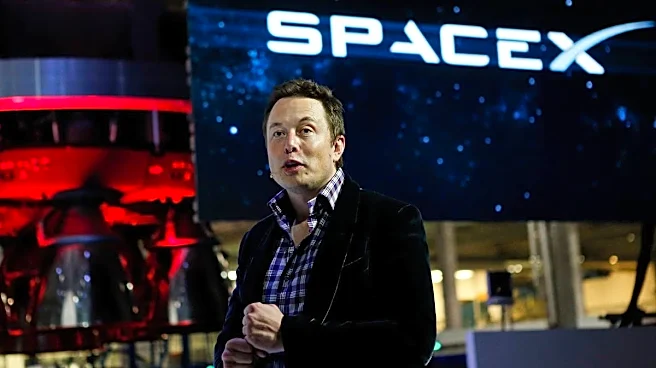
SpaceX, the aerospace company founded by Elon Musk, has completed the largest initial public offering (IPO) in history, entering the public market with a valuation of approximately $1.8 trillion. The IPO, which took place on June 12, 2026, saw shares
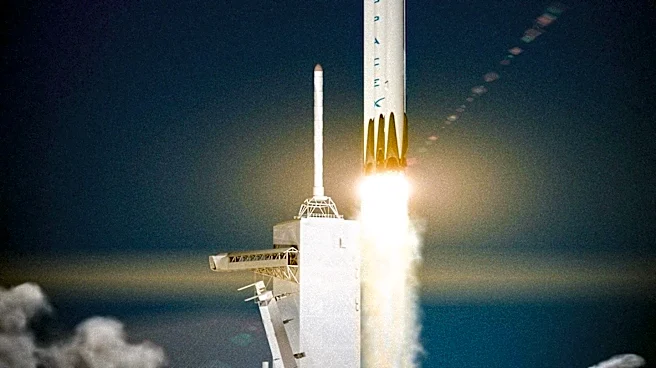
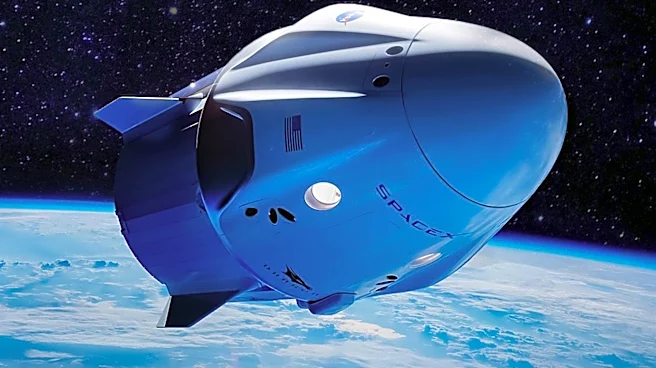
priced at $135 each, raising about $75 billion. Investor demand was high, with shares surging on the first day of trading, pushing the company's market value above $2 trillion. SpaceX allocated a significant portion of its shares to retail investors, a departure from the typical IPO strategy. The company is known for its Falcon rockets, Starlink satellites, and recent acquisition of xAI, Musk's artificial intelligence venture.
Why It's Important?
SpaceX's IPO marks a significant milestone in the commercial space industry, opening up investment opportunities to the public and potentially reshaping the market dynamics. The company's high valuation reflects investor confidence in its long-term growth prospects, particularly in satellite communications and space transportation. The IPO also highlights the increasing interest in space-related technologies and the potential for substantial returns. However, the high valuation sets a challenging benchmark for SpaceX to meet investor expectations, especially given the volatile nature of the stock market and the ambitious nature of its projects.
What's Next?
Following the IPO, SpaceX will need to demonstrate its ability to deliver on its ambitious projects, including the expansion of its Starlink satellite network and the development of its Starship program. The company will also face scrutiny over its financial performance and strategic decisions. Investors will be keenly watching for updates on SpaceX's growth strategies and any new partnerships or contracts that could impact its market position. The company's ability to manage its capital expenditures and maintain profitability will be critical in sustaining investor confidence.