




What's Happening?
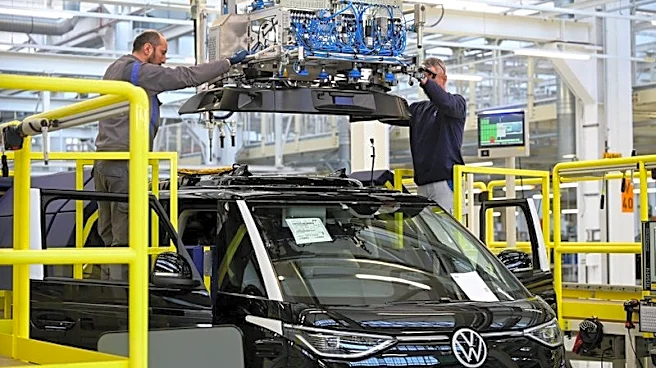
Volkswagen has announced plans to shutter four of its factories, a move that will affect approximately 40,000 employees. The decision is part of a broader strategy to focus on competitive products and technologies. The factories in question are located
in Hanover, Zwickau, Emden, and Neckarsulm, with production not expected to end until after 2030 unless earlier discontinuation is decided. The Zwickau and Emden plants, which produce battery electric vehicles, have already seen a reduction in production capacity due to overcapacity issues. This restructuring plan, known internally as the Group Target Picture, aims to transform Volkswagen AG by potentially eliminating 100,000 jobs globally by 2030. The plan is expected to be discussed at a company board meeting on July 9.
Why It's Important?
The closure of these factories is significant as it reflects the challenges faced by European automakers in maintaining competitiveness against cheaper manufacturing options in Asia, particularly China. The decision underscores the economic pressures on traditional car manufacturers to adapt to changing market dynamics and the shift towards electric vehicles. The potential job losses highlight the social and economic impact on the regions where these factories are located, particularly in Germany. The restructuring could also lead to a reduction in employee influence within the company, a point of contention with labor unions like IG Metall, which have expressed strong opposition to the plan.
What's Next?
The proposed restructuring plan will be further discussed at a Volkswagen board meeting on July 9. If implemented, the plan could lead to significant changes in the company's organizational structure, including the potential spin-off of the core Volkswagen passenger car brand and the Components division. This could open the company further to capital markets. Labor unions are expected to continue opposing the plan, and their response could influence the final decision. The outcome of these discussions will be closely watched by industry stakeholders and could set a precedent for other automakers facing similar challenges.