
What's Happening?
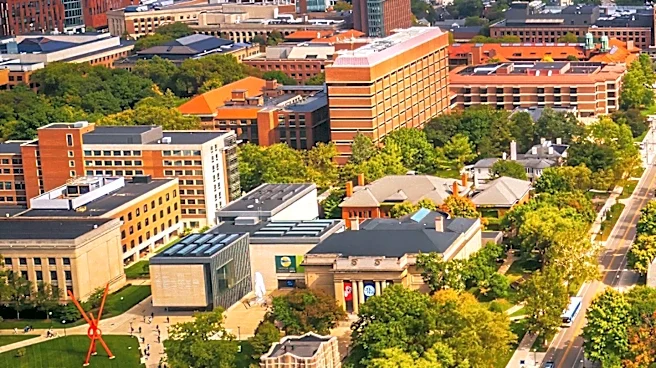
Ann Arbor, Michigan, is experiencing a rapid transformation marked by the construction of numerous high-rise buildings, leading to concerns about the loss of the city's unique character and increasing
unaffordability. According to a University of Michigan student, the proliferation of 'bare-bones, millennial-beige high-rises' is displacing long-standing local establishments, such as Pinball Pete's, which relocated to make way for new development. This trend is observed alongside the arrival of chain businesses like Raising Cane's Chicken Fingers on South University Avenue. The student notes that while there is a recognized need for housing, the pace and style of development are homogenizing the urban landscape, replacing distinctive local spots with generic structures and businesses. This phenomenon is not unique to Ann Arbor, with similar patterns of 'sameness' observed in other cities like New York City, where unique neighborhoods are giving way to standardized commercial facades and experiences.
Why It's Important?
The perceived loss of distinctiveness in Ann Arbor carries significant implications for its identity as a vibrant college town and for the broader urban development landscape in the U.S. The replacement of unique local businesses and architectural styles with generic high-rises and chain stores can erode a city's cultural fabric, diminishing its appeal to both residents and visitors. For students, this transformation can alter the expected 'quaint and eccentric' college experience, potentially impacting their sense of belonging and connection to the community. Economically, while new developments may address housing shortages, they often lead to increased unaffordability, pricing out long-term residents and small businesses. This trend also raises questions about the balance between urban growth, economic development, and the preservation of local heritage and character, a challenge faced by many rapidly developing cities across the nation.
What's Next?
The ongoing development in Ann Arbor is likely to continue, driven by the demand for housing and commercial spaces. However, the growing sentiment among residents and students regarding the loss of distinctiveness may lead to increased advocacy for urban planning policies that prioritize preserving local character and supporting small businesses. Community groups and local government might explore initiatives to encourage diverse architectural styles, protect historic sites, and provide incentives for unique local enterprises. Discussions around affordable housing and sustainable development practices will also become more critical. The University of Michigan, as a major stakeholder, may face pressure to engage in these conversations and consider its role in shaping the city's future, potentially influencing its own development projects and community engagement strategies.
Beyond the Headlines
The 'death of distinction' in Ann Arbor reflects a deeper societal trend towards homogenization, not just in urban landscapes but also in personal experiences and cultural expressions. The article suggests that this 'sameness' extends to the college experience itself, where social media influences lead to curated, often generic, portrayals of student life. This raises profound questions about individuality, authenticity, and the pressures to conform in an increasingly interconnected world. Ethically, it challenges the value placed on unique cultural heritage versus the economic drivers of rapid development. Culturally, it points to a potential erosion of local identity and the unique 'vibe' that makes places special, replaced by a predictable, commercially viable aesthetic. This trend can lead to a sense of displacement and a longing for genuine, unmanufactured experiences, impacting mental well-being and community cohesion. The article implicitly asks whether safety and predictability are worth the cost of losing genuine distinction in our environments and lives.