








What's Happening?
Mid-market manufacturers in the U.S. are increasingly exploring the use of physical AI to enhance their operations. Physical AI enables machines to perceive, analyze, and respond to real-time conditions, offering a way to make manufacturing environments
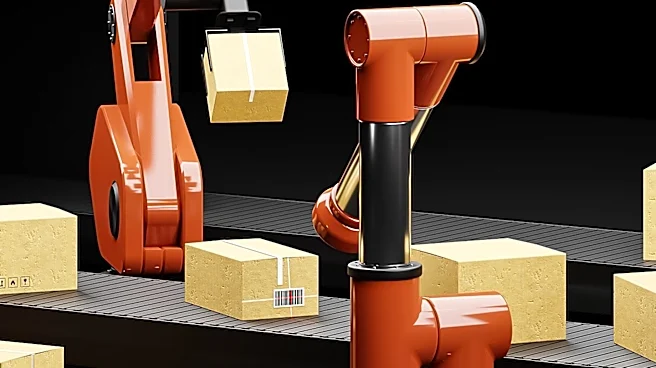
more adaptable. This technology is particularly beneficial for mid-market manufacturers who face challenges such as fluctuating production schedules, labor constraints, and the need to manage a diverse mix of products. By implementing AI-powered inspection systems, adaptive warehouse robotics, and computer vision tools, these manufacturers can improve safety, efficiency, and responsiveness without the need for large-scale facility redesigns. The adoption of physical AI often begins with targeted pilot projects that address specific operational challenges, allowing companies to demonstrate value and build momentum for broader implementation.
Why It's Important?
The adoption of physical AI by mid-market manufacturers is significant as it addresses the unique challenges faced by this sector, such as limited resources and the need for flexibility in operations. By leveraging AI, these manufacturers can enhance their resilience and competitiveness in a rapidly changing market. The ability to adapt to real-time conditions can lead to fewer disruptions, improved safety, and increased productivity. This technological advancement also provides a pathway for mid-market companies to modernize their operations incrementally, reducing the risk associated with large-scale transformations. As these manufacturers become more efficient and responsive, they can better meet customer demands and navigate economic uncertainties.
What's Next?
As mid-market manufacturers continue to explore physical AI, the focus will likely remain on targeted pilot projects that demonstrate clear operational benefits. Companies may increasingly adopt subscription-based or as-a-service models to manage costs and reduce the risk of large upfront investments. The success of these initiatives could lead to broader adoption of AI technologies across the sector. Additionally, manufacturers may need to invest in building in-house AI expertise or partner with external providers to fully leverage the potential of physical AI. As the technology proves its value, it could become a standard component of mid-market manufacturing operations, driving further innovation and efficiency.