


What's Happening?
Oliver Bearman, a driver for the MoneyGram Haas F1 Team, expressed significant frustration following a challenging triple-header of races, describing it as a 'horrible three weeks.' His remarks came after finishing 17th in the Sao Paulo Grand Prix, a race where
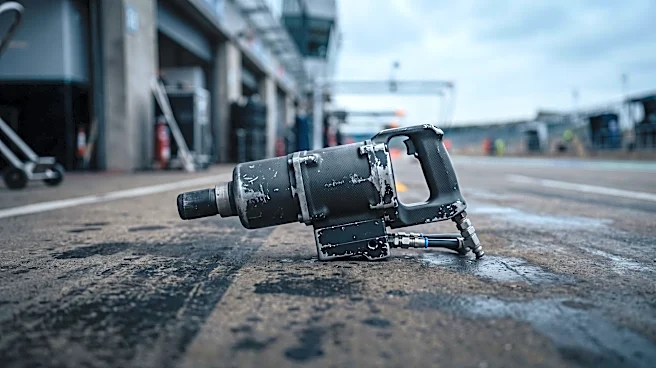
slow pit stops severely hampered his performance. Bearman had qualified in the top 10 in wet conditions, but issues during the race, including contact with Fernando Alonso and subsequent slow pit stops, dropped him out of contention for points. He also failed to finish races in Austin and Mexico City during this period. Bearman highlighted that the pit stop in Sao Paulo specifically demoted him from a potential points-scoring position (P10) to P17, despite having strong pace. He emphasized the team's missed opportunities to score points and the need to 'move on and do better.'
Why It's Important?
Oliver Bearman's public frustration underscores critical operational challenges within the MoneyGram Haas F1 Team, an American-owned entity in Formula 1. Consistent issues like slow pit stops directly impact a team's ability to convert qualifying performance into race results, which is vital for securing championship points and improving constructor standings. For Haas, these performance shortfalls can affect their financial incentives from Formula 1, their attractiveness to sponsors, and their ability to recruit and retain top talent. For Bearman, a young and aspiring driver, these operational failures are particularly damaging as they hinder his ability to demonstrate his full potential and secure his future in the sport. The team's struggle to capitalize on opportunities, especially when rivals are gaining points, highlights a competitive disadvantage that needs urgent addressing to maintain their standing in the highly competitive F1 grid.
What's Next?
Following Oliver Bearman's candid remarks, the MoneyGram Haas F1 Team is expected to conduct a thorough review of its pit stop procedures and overall race strategy to address the identified operational deficiencies. Improving pit stop efficiency and reliability will be a key focus to prevent similar issues in future races. The team will also need to analyze the incidents that led to Bearman's retirements and penalties in Austin and Mexico City to minimize recurrence. From Bearman's perspective, he will likely be looking for tangible improvements from the team to support his performance. His comments suggest a need for the team to demonstrate progress and provide a more competitive and reliable environment. The team's response to these criticisms will be crucial for their morale, future performance, and their ability to retain drivers like Bearman who are seeking to advance their careers.
Beyond the Headlines
Oliver Bearman's public expression of frustration, while direct, also reflects the immense pressure and high stakes involved in Formula 1. Drivers are not only judged by their individual skill but also by the performance and reliability of their entire team. When a team consistently underperforms in critical areas like pit stops, it can lead to a breakdown of trust and morale, impacting the psychological well-being of the drivers and the team as a whole. This situation highlights the delicate balance between team loyalty and individual ambition in a sport where every millisecond and every point counts. It also brings into focus the broader cultural and operational aspects of a racing team, where even small inefficiencies can have significant consequences. The incident serves as a reminder that success in F1 is a collective effort, and failures in any department can undermine the efforts of the entire organization, including its most talented individuals.