



What's Happening?
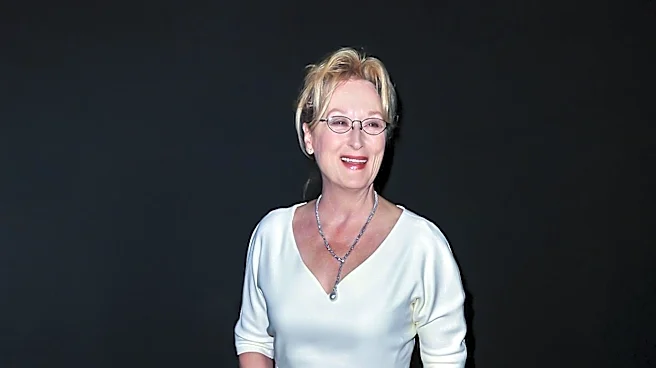
Meryl Streep recently hosted a special screening of 'My Undesirable Friends: Part II – Exile' at New York City’s Film Forum on November 1. Streep, who serves as an executive producer for the series alongside Laura Poitras, introduced screenings of Chapters
One to Three. She was joined by filmmaker Julia Loktev and protagonists Ksenia Mironova and Elena Kostyuchenko. Streep expressed her honor to be with the group of women, calling them intrepid and an inspiration. Later the same day, Chapters Four to Five were screened, followed by a special panel moderated by Kirsten Johnson. This series is a follow-up to 'My Undesirable Friends: Part I – Last Air in Moscow,' which received critical acclaim in 2025, winning multiple awards including the Gotham Award and nominations for a Spirit Award and Oscar shortlist. The series focuses on young journalists who fled Moscow after Russia's invasion of Ukraine led to the shutdown of independent media, making truth-telling a crime.
Why It's Important?
The event highlights the ongoing challenges faced by independent journalists from Russia who are working in exile. By supporting and hosting screenings of 'My Undesirable Friends: Part II – Exile,' Meryl Streep brings significant public attention to the plight of these individuals and the broader issue of media suppression. The series itself serves as a crucial platform for understanding the personal and professional sacrifices made by those who oppose the war and seek to provide alternative narratives to Russian propaganda. The involvement of prominent figures like Streep can help raise awareness among U.S. audiences about international press freedom issues and the human cost of conflict-driven censorship. This also underscores the role of documentary filmmaking in shedding light on global sociopolitical crises and fostering empathy and understanding across borders.
What's Next?
The continued screenings and discussions surrounding 'My Undesirable Friends: Part II – Exile' are likely to further amplify the voices of the exiled Russian journalists featured in the series. The film's critical acclaim and the involvement of high-profile individuals like Meryl Streep suggest it will continue to gain traction in film festivals and public discourse, potentially leading to broader distribution and increased viewership. This exposure could foster greater international support for independent media initiatives and journalists operating under repressive regimes. Furthermore, the series may inspire further dialogue about the responsibilities of media in times of conflict and the importance of protecting journalistic integrity globally. The ongoing narrative of these journalists, as they redefine their lives and work in exile, will likely continue to evolve and be documented.
Beyond the Headlines
The series delves into profound ethical and existential questions faced by individuals forced to leave their homes and careers for the sake of truth. It explores the psychological toll of exile, the redefinition of concepts like 'home,' 'family,' and 'friendship' under duress, and the moral accountability journalists feel when reporting on their own country's actions. The use of dark humor by the protagonists to cope with their circumstances reveals a deeper human resilience in the face of adversity. This narrative also implicitly critiques the global landscape of press freedom, highlighting how easily it can be eroded and the courage required to uphold it. The film serves as a testament to the enduring power of journalism as a tool for resistance and a means of preserving historical truth, even when confronted with severe state repression and personal danger.