







What's Happening?
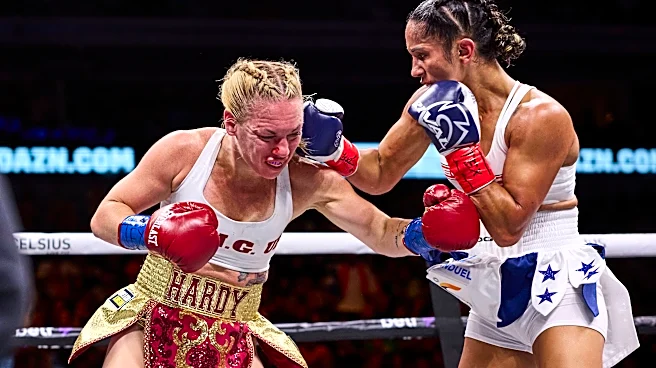
Former world boxing champion Heather Hardy, 44, who retired in 2024, has filed a $10 million lawsuit against Most Valuable Promotions (MVP), the promotional company publicly associated with Jake Paul. Hardy alleges violations of the Muhammad Ali Reform
Act due to negligence, claiming that the organizers ignored potential warning signs regarding her health and pressured her to fight despite a precarious financial situation. She states that her last bout, a rematch against Amanda Serrano in August 2023, caused a 'career-ending brain injury' that has affected her health, vision, and ability to work. MVP, in response, stated that they followed all applicable protocols, and Hardy received medical clearance from the athletic commission overseeing the event.
Why It's Important?
This lawsuit brings to the forefront critical issues regarding fighter safety, promoter responsibility, and the long-term health consequences of combat sports. The Muhammad Ali Reform Act aims to protect boxers from exploitative practices, and this case will test its application in modern boxing. If successful, Hardy's lawsuit could set a precedent for how promoters are held accountable for the well-being of fighters, potentially leading to stricter medical protocols and increased financial protections. It also highlights the vulnerability of athletes, particularly those facing financial difficulties, who may feel compelled to compete despite health risks. The involvement of a high-profile figure like Jake Paul's promotional company adds significant public scrutiny to these concerns.
What's Next?
The lawsuit will proceed through the legal system, with both parties presenting their arguments and evidence. The outcome could have significant implications for the boxing industry, potentially leading to changes in how fights are sanctioned, how medical clearances are obtained, and the extent of promoter liability. Other fighters who have suffered similar injuries may be encouraged to pursue legal action. The case will likely spark further debate about the ethical responsibilities of promoters and athletic commissions in safeguarding the health of athletes in high-impact sports. The boxing community will closely watch the proceedings for any potential shifts in industry standards and legal precedents.
Beyond the Headlines
This case delves into the often-overlooked human cost of professional boxing, exposing the severe and lasting impact of brain injuries on athletes. It raises profound ethical questions about the balance between entertainment, profit, and fighter welfare. The lawsuit also sheds light on the systemic pressures within combat sports that can lead athletes to make difficult choices regarding their health. Beyond the legal ramifications, it could contribute to a broader societal conversation about the long-term care and support systems available for athletes who suffer career-ending injuries. The case underscores the need for robust regulatory frameworks and a culture that prioritizes athlete safety over commercial interests, especially in sports with inherent risks of traumatic brain injury.