







What's Happening?
Korea Southern Power has been recognized with a government award at the 2026 Green Finance Excellence Awards, hosted by the Ministry of Climate, Energy and Environment and the Korea Environmental Industry and Technology Institute. The company received
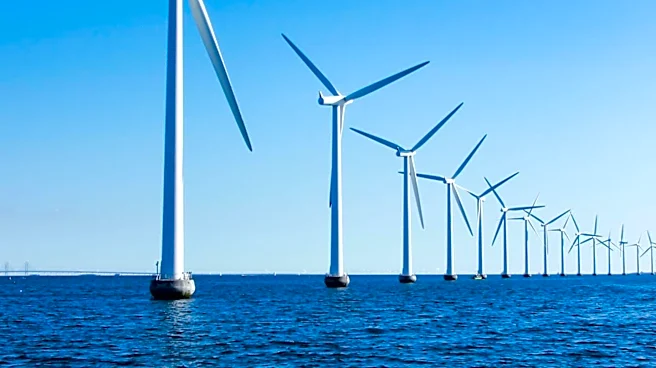
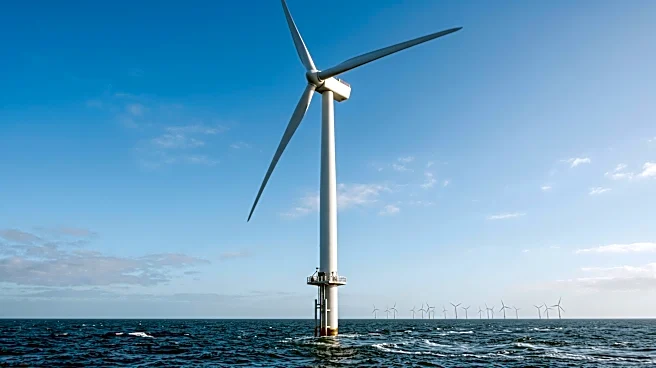
the minister's award for channeling the entire 100 billion won ($69 million) raised through Korean-type green bonds into offshore wind power generation projects. This initiative, launched in June, was lauded for effectively linking demand for environmentally friendly investment in financial markets with energy transition projects. Korean-type green bonds are specifically designed to finance environmentally friendly projects that align with the government's Korean Green Taxonomy (K-Taxonomy). Issuers of these bonds are required to undergo expert review and report on the utilization of funds, ensuring transparency and accountability in their green investments.
Why It's Important?
This award highlights a growing global trend where governments are actively promoting and recognizing green finance initiatives to achieve carbon neutrality goals. For the U.S., this development signals the increasing importance of green bonds as a mechanism for funding renewable energy projects and transitioning towards a sustainable economy. The success of Korea Southern Power in securing and deploying green bond funds for offshore wind projects could serve as a model for U.S. energy companies and policymakers. It demonstrates how targeted financial instruments can accelerate investment in critical renewable energy infrastructure, contributing to national climate objectives. The emphasis on transparency, expert review, and reporting in Korean-type green bonds also sets a precedent for accountability in green finance, which could influence best practices and regulatory discussions within the U.S. market.
What's Next?
Korea Southern Power has announced plans to continue issuing green bonds to secure further funding for renewable energy investments, aiming to shift its business structure towards renewable energy, particularly offshore wind. This commitment indicates a sustained effort to leverage green finance for long-term energy transition. The recognition from the government is likely to encourage other companies in Korea and potentially in other nations, including the U.S., to explore similar green bond mechanisms. Future developments will likely involve increased scrutiny on the actual environmental impact of these projects, beyond just the allocation of funds. This could lead to more sophisticated reporting requirements and impact assessments to ensure that green bonds genuinely contribute to carbon neutrality and sustainable development goals.
Beyond the Headlines
The award to Korea Southern Power for its green bond utilization goes beyond a simple recognition; it underscores the strategic alignment between financial markets and national climate policy. The K-Taxonomy framework provides a clear definition of 'green' projects, reducing ambiguity and enhancing investor confidence. This structured approach to green finance could inspire U.S. states or federal agencies to develop similar taxonomies, creating a more standardized and trustworthy market for green investments. The focus on offshore wind power also highlights the critical role of specific renewable technologies in achieving energy transition. This could spur further innovation and investment in offshore wind infrastructure globally, including in the U.S., as countries compete to lead in renewable energy development and attract green capital. The integration of green finance into national economic strategies represents a fundamental shift towards valuing environmental outcomes alongside financial returns.