







What's Happening?
Brent Williams, a Kentucky nutritionist who developed a life-threatening allergy to red meat known as alpha-gal syndrome, has ventured into ostrich farming. This allergy, triggered by tick bites, causes symptoms like hives, diarrhea, and itchiness after
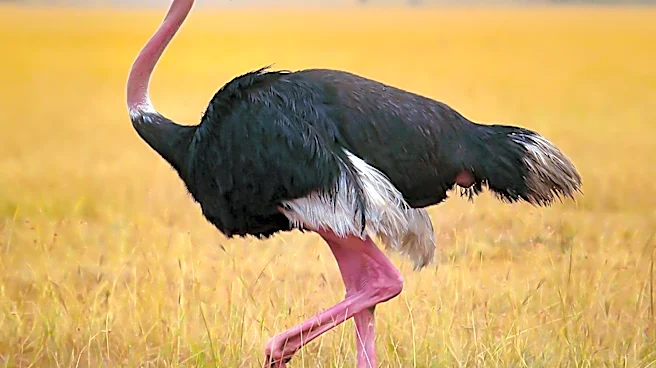
consuming red meat. Ostrich meat, which is red in color and high in iron, offers a taste and texture similar to beef but is safe for individuals with alpha-gal syndrome. Williams, a partner at Alpha Roost Farms in Danville, Kentucky, was approached by owner W.D. King with the business proposition. The farm currently has over 400 ostriches and plans to expand its herd to 700 by next year to meet the increasing demand from those with the allergy. A pound of ground ostrich can cost over $20, with choice cuts exceeding $40. The Alpha-Gal Association, a non-profit advocacy group, also recommends ostrich as a dietary substitute.
Why It's Important?
The rise of alpha-gal syndrome in the U.S. is creating a niche but growing market for alternative red meats like ostrich. This development is significant for the agricultural sector, as it highlights a potential new revenue stream for farmers and a shift in consumer demand driven by health concerns. For individuals suffering from alpha-gal syndrome, ostrich meat provides a crucial dietary alternative, improving their quality of life by allowing them to enjoy a red meat experience without allergic reactions. The high price point of ostrich meat, exceeding $20 per pound for ground meat, indicates a premium market that could attract more producers. This trend could also spur research into tick-borne illnesses and their long-term health impacts, as the number of reported alpha-gal cases continues to rise, with experts suggesting the actual number of sufferers could be as high as half a million.
What's Next?
Alpha Roost Farms plans to nearly double its ostrich herd by next year, indicating a strong belief in the continued growth of this market. Other large ostrich farms, such as Boyd Clark's in Texas, are also expanding their operations, with plans to increase their herds by 50%. This expansion suggests a potential for increased availability of ostrich meat in the U.S. market, which could eventually lead to more competitive pricing. The growing demand from individuals with alpha-gal syndrome, coupled with interest from restaurants and small stores, points to a developing supply chain for ostrich products. However, the industry will need to learn from past challenges, such as the crash in the 1990s when producers lacked experience with the birds and failed to provide adequate free-range space. Future success will depend on sustainable farming practices and a deeper understanding of ostrich husbandry.
Beyond the Headlines
The emergence of ostrich farming as a response to alpha-gal syndrome highlights the intricate connections between public health, environmental factors, and agricultural innovation. The increasing prevalence of tick-borne illnesses like alpha-gal syndrome underscores broader ecological shifts, potentially linked to climate change and changes in wildlife populations, which bring ticks into closer contact with humans. This situation forces a re-evaluation of traditional food sources and encourages the exploration of less conventional alternatives. The personal story of Brent Williams also illustrates how individual health challenges can drive entrepreneurial solutions, creating new economic opportunities while addressing unmet consumer needs. This niche market could also pave the way for other alternative protein sources to gain traction, challenging established dietary norms and potentially influencing future food production systems in the U.S.