



What's Happening?
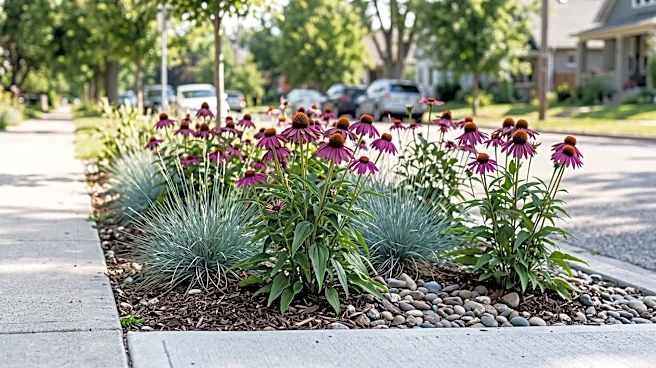
The PlantNebraska Podcast, in its 119th episode titled 'Hell Strips and Corners,' addresses the challenges of designing and planting in difficult urban spaces, specifically the areas between sidewalks and streets. These 'hell strips' are exposed to extreme
conditions including heat, shade, salt, snow, traffic, pedestrians, pets, utilities, and compacted soil. Hanna and Sarah, the hosts, provide guidance on how to design these spaces effectively, considering how people use them, and recommend a variety of tough plants suitable for such environments. The episode aims to demonstrate that these often-overlooked areas can be vibrant and functional despite their harsh conditions.
Why It's Important?
This podcast episode is important for urban planning, environmental sustainability, and community aesthetics across the U.S. By offering practical solutions for 'hell strips,' it promotes green infrastructure in densely populated areas, which can improve air quality, manage stormwater runoff, and enhance biodiversity. The recommendations for resilient plants can help reduce maintenance costs for municipalities and homeowners, while also contributing to more visually appealing neighborhoods. Furthermore, encouraging the greening of these spaces can foster a greater connection between urban residents and nature, potentially leading to increased community engagement in local environmental initiatives. This initiative directly impacts public spaces and local ecosystems.
What's Next?
The information provided in this podcast episode could lead to increased adoption of resilient planting strategies in urban and suburban areas. Homeowners, landscape designers, and city planners might utilize the recommended plant lists and design principles to transform neglected 'hell strips' into thriving green spaces. This could spark local initiatives for community beautification and environmental improvement. Educational workshops or local government programs might emerge, offering resources and support for implementing these planting techniques. The ongoing discussion around sustainable urban landscaping is likely to grow, with a focus on practical, low-maintenance solutions for challenging environments.
Beyond the Headlines
Beyond the immediate practical applications, this discussion touches on broader themes of urban resilience and ecological adaptation. It highlights the importance of selecting plant species that can withstand the increasing pressures of climate change and urban development. The concept of transforming 'hell strips' into 'heaven strips' reflects a cultural shift towards valuing and optimizing every available green space, no matter how small or challenging. This initiative could inspire innovative approaches to urban design that prioritize ecological function and human well-being, fostering a deeper appreciation for the role of plants in creating livable and sustainable cities. It also subtly challenges the traditional view of urban landscapes as purely functional, advocating for their potential as ecological corridors and aesthetic assets.