

What's Happening?
The IX Sports Podcast Basketball Edition recently featured a discussion on the increasing impact of the WNBA on American domestic politics, with reporter Kate Riga from Talking Points Memo joining hosts Jackie Powell and Howard Megdal. The conversation
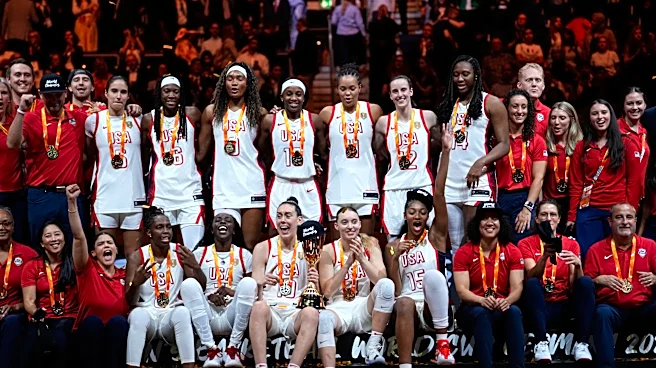
highlighted that while the WNBA's presence in right-wing American politics is not new, the current attention is more sustained. Riga suggested that this scrutiny is part of a broader project linked to Christian nationalism and traditional gender roles, viewing the league as a threat due to its composition of predominantly Black and gay women athletes who are gaining significant popularity and financial recognition. The podcast also touched upon the absence of women's sports leagues in a recent statement by various sports leagues condemning betting-related harassment, a point of concern for the WNBA Players Association. Additionally, Powell discussed the WNBA's growing 'informal influence' with FIBA, indicating increased power for the league as an institution.
Why It's Important?
This discussion underscores the evolving intersection of sports, culture, and politics in the U.S., particularly concerning women's professional sports. The WNBA's increasing visibility and the demographic makeup of its athletes are challenging traditional narratives and attracting both support and opposition from different political factions. The podcast's analysis suggests that the league's growing popularity and the financial success of its players are perceived as a threat by certain conservative ideologies, highlighting a cultural clash over gender roles and representation. The omission of women's sports leagues from a statement on betting-related harassment also points to ongoing disparities in how male and female athletes are protected and valued within the broader sports industry. The concept of the WNBA gaining 'informal influence' with international bodies like FIBA signifies a shift in power dynamics, potentially leading to more favorable conditions and greater recognition for women's basketball on a global scale.
What's Next?
The ongoing political and cultural scrutiny surrounding the WNBA is likely to continue as the league's popularity and influence grow. This could lead to further public discourse and potentially impact policy discussions related to sports, gender equality, and representation in the U.S. The WNBA Players Association and other advocacy groups may continue to push for greater inclusion and protection for women athletes, particularly in areas like addressing harassment related to sports gambling. As the WNBA's 'informal influence' with organizations like FIBA strengthens, there could be future changes in scheduling and international competition structures that further benefit the league and its players. The hosts also mentioned a 'race to the bottom of the ranks' for draft picks, indicating strategic team decisions that will shape the league's competitive landscape in upcoming seasons.
Beyond the Headlines
The conversation on The IX Sports Podcast delves into deeper societal implications beyond just sports. The 'obsession' of the American right with the WNBA, as described, reflects broader anxieties about changing social norms, particularly regarding gender, race, and sexuality. The league, with its diverse roster of athletes, has become a symbol in the ongoing culture wars, representing a challenge to traditional power structures and conservative values. This phenomenon highlights how sports can serve as a microcosm for larger societal debates, reflecting shifts in public opinion and political polarization. The discussion also implicitly raises questions about media representation and the narratives constructed around women's sports, particularly when they intersect with political ideologies. The WNBA's journey towards greater recognition and influence, despite facing such scrutiny, speaks to the resilience and growing power of marginalized communities and their allies in shaping the future of American culture and sports.