


What's Happening?
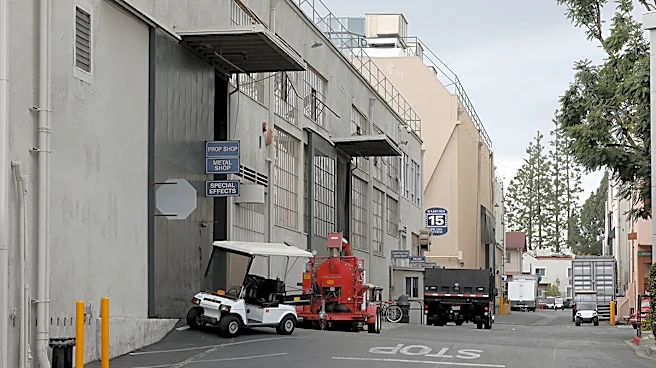
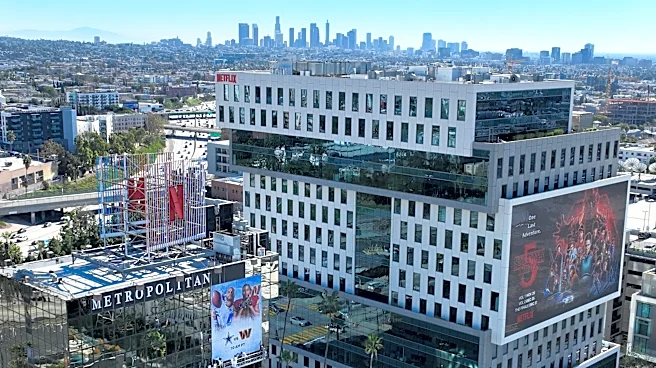
Netflix has purchased the Radford Studio Lot for $380 million, marking a significant expansion of its physical production footprint in Los Angeles. The deal, expected to close soon, follows an auction where the property's lender repossessed it after Hackman
Capital Partners defaulted on its mortgage. Netflix reached an agreement with the Goldman Sachs-led lender to acquire the 55-acre shooting campus. This acquisition is part of Netflix's strategy to strengthen its investment in Los Angeles and California, aiming to consolidate its production activities that were previously scattered across various rented facilities like Sunset Studios and Raleigh Studios. Since 2018, Netflix has filmed over 300 movies and TV shows in L.A., with more than 45 produced this year, demonstrating its commitment to deepening its roots in the region. The company also paid a 5.5 percent 'mansion tax' as part of the deal for properties valued above $10.9 million. Additionally, Netflix has partnered with Zello's ZVantage for transition management and Cinelease for production equipment services.
Why It's Important?
This acquisition is important for several reasons, primarily for Netflix's operational efficiency and its long-term commitment to the California film industry. By owning Radford Studio Lot, Netflix can consolidate its production pipeline, potentially cutting costs associated with renting multiple studio spaces. This move signifies a strategic shift towards greater control over its production infrastructure in a key content creation hub. For the broader Los Angeles and California entertainment industry, Netflix's investment is a positive signal, especially given the recent trend of filming moving away from the region. The company's stated goal of supporting local writers, builders, electricians, drivers, designers, and talent underscores its role as a major employer and economic contributor. The deal also reflects a significant repricing of a legacy Hollywood lot, as the $380 million Netflix paid is substantially less than the $1.85 billion Hackman paid in 2021, indicating market adjustments in the real estate sector for production facilities.
What's Next?
In the immediate future, Netflix will focus on managing the transition of the Radford Studio Lot, working with Zello and Cinelease to ensure a smooth integration into its production operations. This consolidation is expected to streamline Netflix's filming processes in Los Angeles, potentially leading to more efficient content creation. While the deal could eventually impact Netflix's office operations, the company has indicated no short-term changes to its existing leases at Sunset Studios, which are scheduled to expire in 2031. The acquisition is also likely to be viewed by state and city officials as a positive development, potentially encouraging further investment in California's film industry. Netflix's continued investment in physical infrastructure in Los Angeles suggests a long-term strategy to maintain its position as a leading content producer, leveraging local talent and resources.
Beyond the Headlines
Beyond the immediate operational benefits, Netflix's acquisition of Radford Studio Lot highlights broader trends in the entertainment industry, particularly the increasing vertical integration of major streaming platforms. By owning its production facilities, Netflix gains greater control over its content creation process, from development to post-production, which can lead to more cost-effective and streamlined workflows. This move also underscores the ongoing competition among streaming giants to secure essential infrastructure in key production hubs. The significant price difference between Hackman Capital Partners' 2021 purchase and Netflix's current acquisition reflects the volatile nature of real estate values in the entertainment sector, influenced by production levels and market demand. This could signal a recalibration of asset valuations for studio properties, potentially impacting future investment and development in the industry. Furthermore, Netflix's emphasis on supporting local talent and crew reinforces the importance of regional economic ecosystems for global entertainment companies.