





What's Happening?
HP Sales Northeast is transforming the commercial kitchen equipment buying process by offering an integrated sales and service model, guiding customers from initial equipment selection through installation, training, and ongoing maintenance. This approach
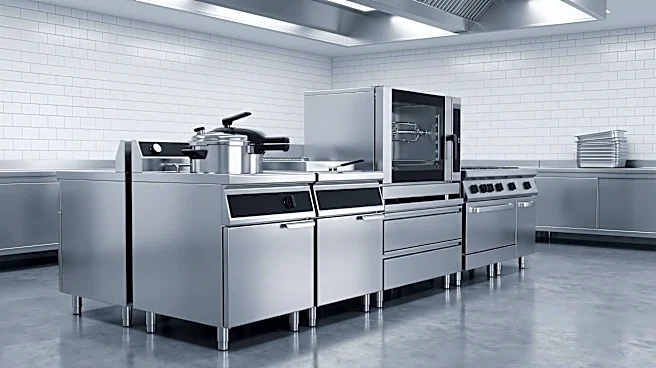
aims to simplify a traditionally fragmented process where operators often coordinate with multiple vendors, including designers, manufacturers' representatives, dealers, installers, and service companies. The company emphasizes understanding a client's specific operational challenges, such as faster cook times or reduced oil usage, before recommending equipment. They provide demonstration kitchens in Mount Laurel, NJ, and Hopkinton, MA, where operators can test equipment with their own ingredients. HP Sales Northeast focuses on a select number of manufacturers, including Fri-Jado and AyrKing, and is the exclusive Henny Penny distributor for the Northeastern U.S., allowing their technicians to develop specialized product knowledge.
Why It's Important?
This integrated model by HP Sales Northeast is significant for the U.S. foodservice industry as it addresses critical pain points in commercial kitchen operations. By consolidating sales and service, the company reduces the risk of miscommunication and operational gaps that can lead to costly downtime and inefficiencies. For restaurant and foodservice operators, this means a more streamlined procurement process, better-informed purchasing decisions, and reliable post-installation support, ultimately leading to a stronger return on investment. The emphasis on specialized technicians ensures quicker and more effective repairs, minimizing disruptions that can severely impact a restaurant's profitability. This approach also sets a new standard for customer service in the commercial equipment sector, potentially influencing other distributors to adopt similar comprehensive models.
What's Next?
The success of HP Sales Northeast's integrated model could encourage other commercial equipment distributors across the U.S. to re-evaluate their sales and service strategies. This might lead to a broader industry trend of offering more holistic solutions, moving away from fragmented vendor relationships. Operators can expect to see more distributors investing in demonstration facilities and specialized training for their service teams. The focus on preventive maintenance and remote monitoring technologies, as mentioned by Scott Woll, suggests a future where equipment issues are anticipated and addressed proactively, further enhancing operational efficiency for foodservice businesses. This shift could ultimately benefit the entire foodservice supply chain by fostering greater accountability and expertise among equipment providers.
Beyond the Headlines
The model championed by HP Sales Northeast reflects a deeper understanding of the operational complexities and financial pressures faced by the foodservice industry. Beyond just selling equipment, the company is selling a partnership and a commitment to long-term operational success. This approach highlights the value of expertise and reliability in a sector where even minor equipment failures can have significant financial consequences. It also underscores a growing demand for 'solutions providers' rather than mere 'product vendors,' indicating a maturation in how businesses seek to manage their capital expenditures and operational continuity. This integrated service model could become a benchmark for best practices in specialized equipment distribution, emphasizing trust and comprehensive support as key differentiators.