







What's Happening?
The market for wet chemicals used in electronics and semiconductor applications is forecast to grow significantly, with projections indicating it will surpass $8.12 billion by 2030. This growth is primarily fueled by the increasing global demand for consumer
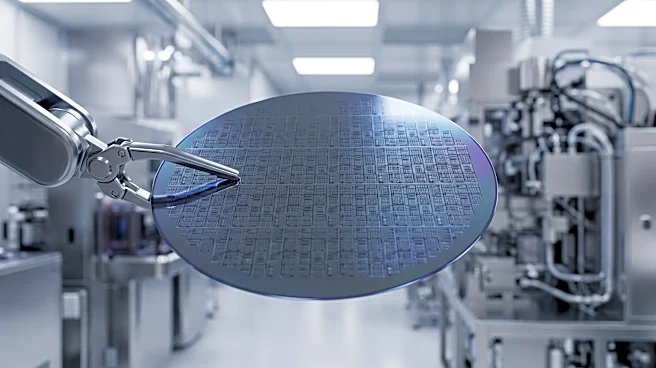
electronics, including smartphones, laptops, wearable technology, and smart home devices. Wet chemicals are crucial in semiconductor manufacturing, facilitating essential processes such as wafer cleaning, etching, and surface preparation. These processes are vital for producing high-precision, defect-free microchips that enhance the performance and miniaturization of electronic components. The market saw an increase from $5.69 billion in 2025 to $6.13 billion in 2026, reflecting a compound annual growth rate (CAGR) of 7.7%. The Asia-Pacific region held the dominant market share in 2025 due to its extensive semiconductor manufacturing and electronics production capabilities, while North America is anticipated to be the fastest-growing region during the forecast period, driven by technological innovation and increased investment in semiconductor technologies.
Why It's Important?
The expansion of the wet chemicals market is critical for the U.S. electronics and semiconductor industries. As North America is projected to be the fastest-growing region, this indicates significant investment and technological innovation within the United States. The indispensable role of these chemicals in producing advanced microchips directly impacts the performance and reliability of consumer electronics and other high-tech devices. A robust supply of these specialized chemicals is essential for domestic semiconductor fabrication, which is a strategic priority for the U.S. to reduce reliance on foreign supply chains. Companies involved in semiconductor manufacturing, chemical production, and consumer electronics stand to gain from this market growth, while disruptions in the supply of these chemicals could impede the production of critical electronic components, affecting various sectors from automotive to defense. The focus on ultra-high purity wet chemicals and advanced fabrication methods underscores the need for continuous research and development to maintain a competitive edge.
What's Next?
The market is expected to continue its strong momentum, driven by the demand for smaller semiconductor components, advanced packaging technologies, and improved yield optimization in semiconductor production. Key trends influencing the market include the increased use of ultra-high purity wet chemicals tailored for cutting-edge semiconductor nodes, the development of sophisticated chemical formulations for wafer fabrication, and the widespread implementation of contamination control and chemical management systems. There will also be a growing focus on environmentally sustainable semiconductor chemical processes and the customization of wet chemical solutions to meet the evolving needs of electronics manufacturing. This trajectory suggests ongoing innovation in chemical engineering and manufacturing processes to support the next generation of electronic devices and semiconductor technologies.
Beyond the Headlines
The growth in the wet chemicals market highlights a deeper trend towards increasing complexity and precision in semiconductor manufacturing. The stringent purity standards and contamination controls required for these chemicals underscore the delicate balance between technological advancement and environmental responsibility. As the industry moves towards more advanced fabrication techniques and smaller components, the demand for highly specialized and environmentally friendly chemical solutions will intensify. This could lead to significant investments in green chemistry and sustainable manufacturing practices within the U.S., potentially setting new global standards for semiconductor production. The ethical implications of chemical waste management and the long-term environmental impact of these processes will become increasingly scrutinized, pushing companies to innovate not only in performance but also in sustainability.