



What's Happening?
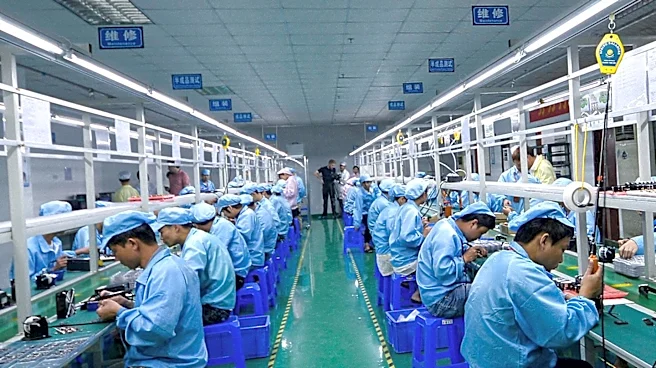
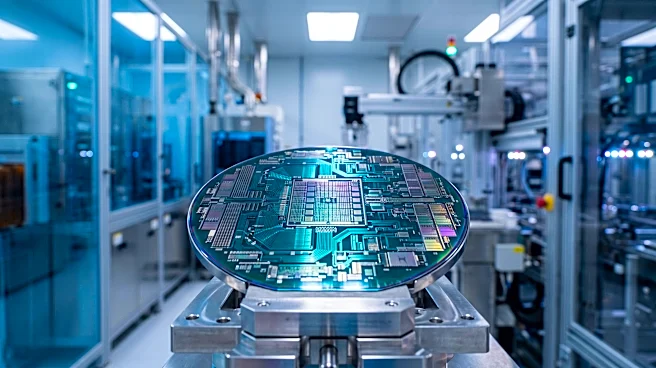
Christophe Fouquet, CEO of ASML, a leading manufacturer of lithography machines essential for chip production, has stated that Chinese chip factories would continue to operate even if ASML were to cease maintenance services for its machines in China.
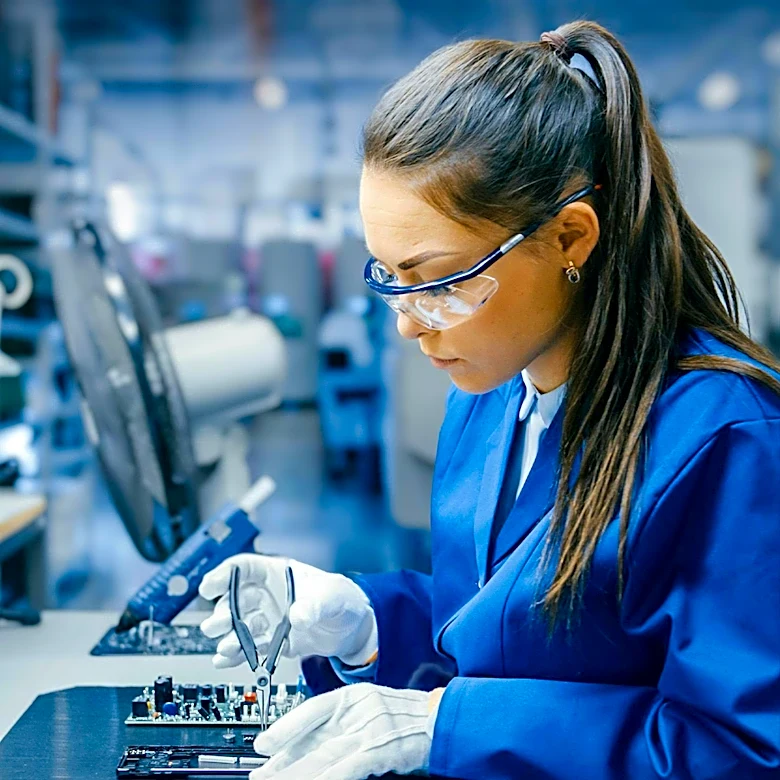
This statement was made during a dialogue with the U.S. Under Secretary of State for Economic Affairs, as reported by Semafor. Fouquet emphasized that cutting off maintenance services would not halt Chinese chip production but would instead lead to other companies stepping in to provide the necessary support. He highlighted that lithography machines require continuous maintenance, software upgrades, and specialized engineering support, which represents a significant long-term revenue stream for ASML. The U.S. has been pushing for restrictions that extend beyond new equipment sales to include maintenance and spare parts for existing immersion DUV lithography machines, aiming to limit China's chip manufacturing capabilities. However, Fouquet's remarks suggest that such measures might only shift the service market to alternative providers rather than incapacitate Chinese fabs.
Why It's Important?
This statement from ASML's CEO carries significant implications for U.S. policy aimed at restricting China's access to advanced chip technology. The U.S. strategy has largely focused on limiting the sale of new equipment and, more recently, extending controls to maintenance and spare parts for existing machinery. Fouquet's assertion challenges the effectiveness of these extended controls, suggesting that they may not achieve their intended goal of crippling Chinese chip production. Instead, such actions could inadvertently foster the growth of alternative service providers and indigenous capabilities within China, potentially reducing ASML's long-term revenue from after-sales services. For ASML, losing the maintenance market in China means forfeiting a substantial and continuous cash flow, turning its sold assets into 'blind boxes' with unknown operational status and component origins. This situation could also accelerate China's efforts to develop its own maintenance and spare parts ecosystem, further diminishing the leverage of foreign suppliers.
What's Next?
The U.S. government may need to re-evaluate the efficacy of its current export control policies regarding semiconductor equipment maintenance in China. If ASML's CEO's assessment is accurate, the strategy of cutting off maintenance services might prove to be a less effective tool for hindering China's chip industry than anticipated. This could lead to discussions within U.S. policy circles about alternative or more stringent measures, or a shift in focus towards other areas of technological competition. For ASML, the company will likely continue to navigate the complex geopolitical landscape, balancing its business interests with compliance to various national regulations. The semiconductor industry as a whole might see an acceleration in the development of third-party maintenance providers and domestic alternatives in China, potentially altering the global supply chain dynamics for chip manufacturing equipment and services. This could also prompt other equipment manufacturers to assess their own strategies in light of these evolving dynamics.
Beyond the Headlines
The deeper implication of Fouquet's statement is the potential for U.S. export controls to inadvertently strengthen China's domestic semiconductor ecosystem. By pushing ASML out of the maintenance market, the U.S. policy could create a vacuum that Chinese companies or other international players are eager to fill. This could lead to a rapid advancement in China's ability to independently maintain and even reverse-engineer sophisticated lithography equipment, reducing its reliance on foreign technology and services in the long run. Furthermore, it highlights the economic costs for companies like ASML, which stand to lose significant recurring revenue from after-sales services. The ethical dimension also comes into play, as companies are caught between national security objectives and their commercial interests, potentially being forced to abandon profitable markets. This scenario underscores the complex interplay between geopolitics, economic interests, and technological self-sufficiency, suggesting that restrictive measures can sometimes have unintended consequences that accelerate the very developments they aim to prevent.