
What's Happening?
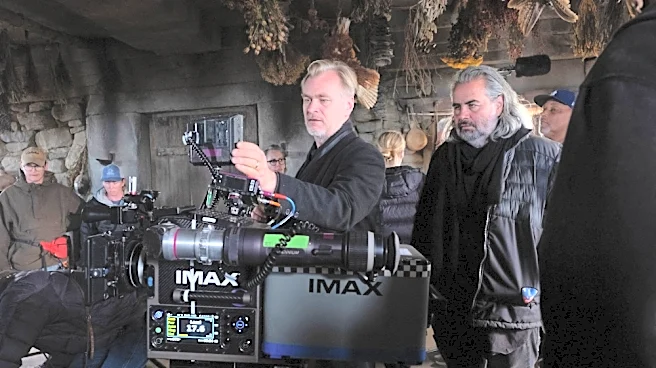
Christopher Nolan's film adaptation of 'The Odyssey' has significantly boosted interest in Homer’s epic across various platforms. The Hebrew translation of the book saw a fivefold increase in sales in July,
according to Magnes Press. This trend is mirrored globally, with increased book sales reported in the United States, the United Kingdom, and France. The film, starring notable actors such as Matt Damon and Zendaya, has also sparked a surge in audiobook listening and interest in learning Greek. Despite its commercial success, the film has faced criticism from classics scholar Emily Wilson, who described it as lacking depth and character development.
Why It's Important?
The renewed interest in 'The Odyssey' highlights the cultural impact of Nolan's film, extending beyond the box office to influence literary consumption and education. This surge in demand for Homer’s work underscores the power of film adaptations in reviving classical literature. The increased sales and interest in Greek language studies suggest a broader cultural engagement with ancient texts, potentially influencing educational curricula and literary trends. However, the criticism from scholars like Emily Wilson points to ongoing debates about the fidelity and artistic interpretation of classical works in modern adaptations.
What's Next?
The film's success may lead to further adaptations of classical literature, encouraging filmmakers to explore ancient texts. The increased interest in Greek studies could result in more educational resources and programs focused on classical languages and literature. Additionally, the film's reception may prompt discussions within the film industry about balancing commercial appeal with artistic depth in adaptations. Stakeholders in the literary and educational sectors might capitalize on this trend by promoting related works and courses.
Beyond the Headlines
The adaptation raises questions about the role of filmmakers in interpreting and presenting classical literature. It highlights the tension between artistic license and scholarly expectations, reflecting broader cultural debates about authenticity and innovation in storytelling. The film's impact on younger audiences, particularly Generation Z and millennials, suggests a shift in how classical texts are consumed and appreciated, potentially influencing future cultural and educational landscapes.