



What's Happening?
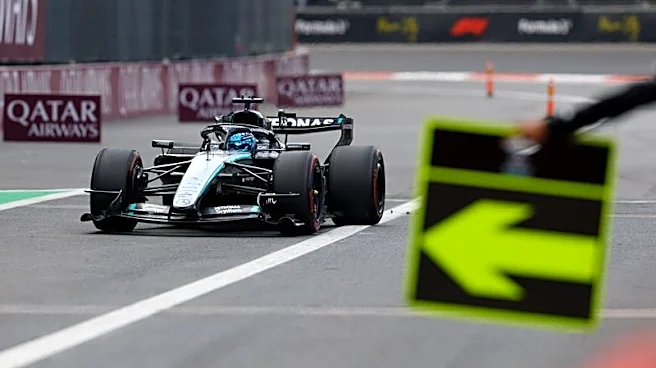
During the Mexican Grand Prix, Red Bull driver Isack Hadjar was involved in a significant collision with Mercedes driver George Russell on the first lap. Russell, attempting an ill-judged overtake, failed to brake effectively and made contact with Hadjar's
Red Bull Ford, sending Hadjar off track. The incident prompted a furious reaction from Hadjar over his team radio, exclaiming, 'What the **** was that!' Following a review by the FIA race stewards, Russell was deemed primarily responsible for the collision and was issued a 10-second penalty, to be served during his pit stop or added to his final race time. Despite the initial setback, Hadjar was later reclassified to ninth place after other drivers received penalties, offering a small consolation for the incident.
Why It's Important?
This incident highlights the intense and often volatile nature of Formula 1 racing, particularly during the opening laps where drivers aggressively vie for position. Such collisions can significantly impact a driver's race outcome, championship points, and team strategy. For Isack Hadjar, being taken out of contention early in the race due to another driver's error is a major setback, affecting his performance and potentially his standing within the Red Bull team. The penalty issued to George Russell underscores the FIA's commitment to maintaining fair play and penalizing dangerous driving, which is crucial for driver safety and the integrity of the sport. The emotional radio message from Hadjar also provides a glimpse into the high-pressure environment and the raw emotions experienced by drivers during critical race moments.
What's Next?
The immediate consequence for George Russell was the 10-second penalty, which impacted his race performance at the Mexican Grand Prix. For Isack Hadjar, while he gained some points due to reclassification, the incident itself was a missed opportunity for a stronger finish. Looking ahead, both drivers will likely carry the memory of this collision into future races, potentially influencing their on-track interactions. The FIA's decision reinforces the rules of engagement on the track, serving as a deterrent against overly aggressive maneuvers. Teams will also analyze such incidents to refine their race strategies and driver instructions, especially concerning first-lap conduct. The emotional outburst from Hadjar, while understandable, may also lead to internal discussions within Red Bull about managing driver composure under pressure.
Beyond the Headlines
The collision between Hadjar and Russell, and Hadjar's subsequent radio outburst, reveal deeper aspects of Formula 1 beyond just racing. It touches on the psychological toll of competition, where split-second decisions and external factors can derail months of preparation. The incident also fuels ongoing debates about racing etiquette, the balance between aggressive driving and dangerous maneuvers, and the effectiveness of penalties in deterring such actions. Furthermore, the public nature of driver communications, often broadcast live, adds another layer of scrutiny to their emotional responses. This transparency, while engaging for fans, can also amplify moments of frustration and potentially impact a driver's public image and sponsor relationships. The reclassification of Hadjar's position also highlights the complex and often delayed nature of race outcomes due to post-race investigations and penalties.