
What's Happening?
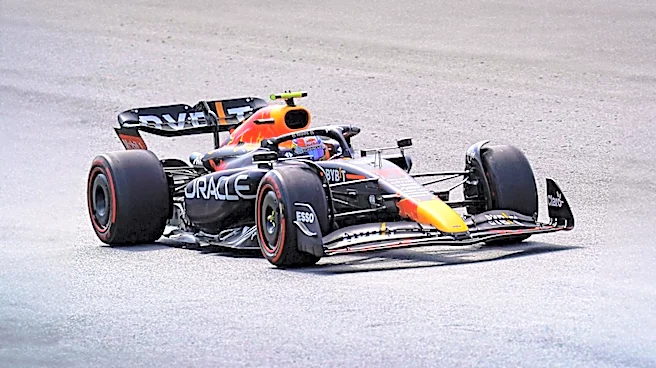
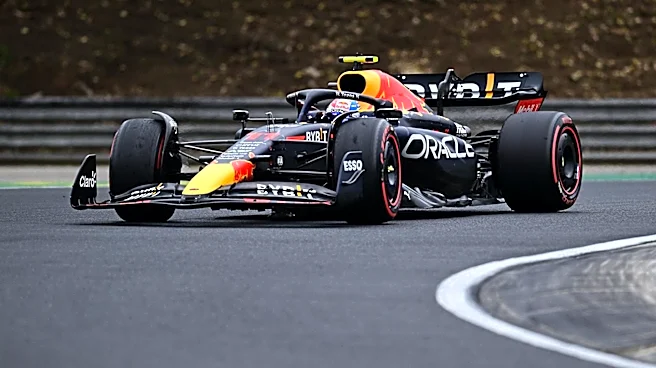
Red Bull Racing has demonstrated a consistent upward trend in its performance throughout the 2026 Formula 1 season, increasing its championship points total in every successive five-race period. The team's
points tally rose from 57 in the opening five Grands Prix to 152 in the most recent five, marking a significant recovery. This progression has transformed Red Bull's competitive standing against rivals like Mercedes and Ferrari. Max Verstappen has been a primary driver of this improvement, scoring 116 of the team's 152 points in the latest five races. Additionally, Isack Hadjar has played an important supporting role, contributing 36 points in the same period, including a third-place finish in São Paulo. This combined effort has allowed Red Bull to become the highest-scoring team over the last five races, surpassing Ferrari's 132 points and Mercedes' 114 points.
Why It's Important?
This consistent improvement by Red Bull Racing is crucial for the competitive landscape of Formula 1, especially as it challenges the dominance previously established by Mercedes. While Mercedes has already secured both world championships, Red Bull's late-season surge suggests a narrowing of the competitive gap. This shift in momentum could have significant implications for the 2027 season, potentially setting the stage for a more intense championship battle. For sponsors and investors, Red Bull's recovery signals a strong and competitive brand, potentially increasing its commercial appeal. The team's ability to improve its car and strategy throughout the season, coupled with strong driver performances, highlights effective team management and technical development, which are vital for long-term success in the sport. It also provides a compelling narrative for fans, showcasing a team's ability to overcome early-season struggles.
What's Next?
The remaining races of the 2026 season, including events in Las Vegas, Qatar, and Abu Dhabi, will be critical in determining whether Red Bull's recovery represents a lasting change in the competitive order. The team will aim to maintain its momentum and further solidify its position as a top contender. Looking ahead to 2027, the new regulations and car developments will be key. Red Bull's current upward trajectory could provide a strong foundation for next season, particularly if both Max Verstappen and Isack Hadjar continue to deliver strong performances. Mercedes, having secured the championships, may have already shifted development resources towards its 2027 car, which could alter the competitive balance. The performance trends observed in the latter part of 2026 will heavily influence expectations and strategies for the upcoming season.
Beyond the Headlines
Red Bull's consistent improvement reflects a deeper organizational resilience and strategic adaptability within a highly competitive and technologically driven sport. This ability to continuously refine and enhance performance throughout a season, despite initial setbacks, speaks to the effectiveness of their engineering, data analysis, and operational processes. It also underscores the dynamic nature of Formula 1, where continuous innovation and rapid response to challenges are paramount. The interplay between driver skill (Max Verstappen's resurgence) and team development (Isack Hadjar's contributions and overall car improvement) illustrates the symbiotic relationship required for success. This narrative extends beyond the racetrack, offering insights into how complex, high-stakes organizations manage performance, adapt to adversity, and strive for continuous improvement in fast-evolving environments.