






What's Happening?
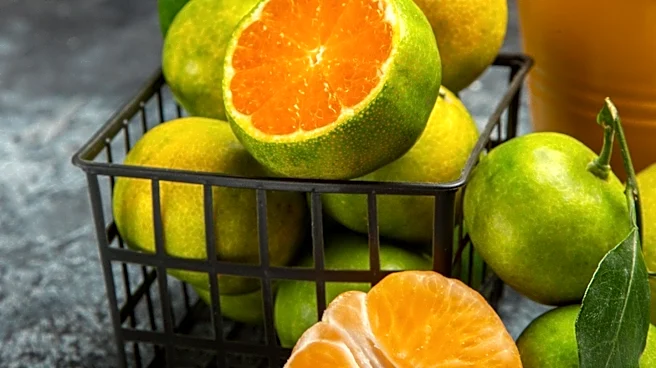
Minneola Tangelos, also known as Honeybells, are a distinct citrus fruit characterized by their pear-like shape with a prominent protrusion at the stem-end. They possess a deep red-orange, smooth yet pitted and oily rind. The flesh is fragmented and can
contain varying numbers of seeds, from none to over a dozen. These tangelos are noted for their aromatic, juicy, rich, and sweet-tart flavor profile. Botanically classified as Citrus tangelo, the Minneola is a hybrid, resulting from a cross between a Duncan grapefruit and a Dancy tangerine. This unique parentage makes it the sole citrus of its kind. Minneola Tangelos are typically available during the winter and early spring seasons.
Why It's Important?
The availability of Minneola Tangelos during the winter and early spring offers consumers a unique and flavorful citrus option during these months. Its distinctive sweet-tart taste and juicy texture make it a desirable fruit for fresh consumption, as well as for culinary applications in the U.S. food industry. For agricultural producers, understanding the specific cultivation requirements of Minneola Tangelos, such as the need for cross-pollination with other cultivars to ensure productive yields, is crucial. While cross-pollination is necessary for fruit production, it also leads to the presence of multiple seeds, which can be a consideration for consumers and processors. The Minneola's unique genetic makeup as a hybrid of grapefruit and tangerine contributes to the diversity of citrus fruits available in the market, potentially influencing consumer preferences and agricultural breeding programs.
What's Next?
As Minneola Tangelos are not optimal self-fruiters, future cultivation efforts will continue to focus on planting them in close proximity to other pollinating cultivars to maximize yields. This practice, while essential for production, will likely continue to result in fruits bearing multiple seeds. Research and development in citrus breeding might explore methods to reduce seed count while maintaining the desirable flavor and growth characteristics. Consumers can anticipate the continued seasonal availability of Minneola Tangelos from winter through early spring, and their unique flavor profile may lead to increased use in various food products and beverages. The agricultural sector will likely continue to monitor market demand and adapt cultivation practices to meet consumer preferences for this distinctive citrus fruit.
Beyond the Headlines
The existence of the Minneola Tangelo highlights the broader impact of horticultural innovation and cross-breeding in creating new and desirable food products. Its hybrid nature, combining characteristics of both grapefruit and tangerine, showcases the potential for genetic diversity within the citrus family to produce novel flavors and textures. The necessity for cross-pollination underscores the intricate ecological relationships required for successful fruit production, emphasizing the role of biodiversity in agriculture. Furthermore, the Minneola's seasonal availability influences dietary patterns and consumer choices, promoting the consumption of fresh, in-season produce. This also has implications for local economies where these fruits are cultivated, supporting agricultural communities and supply chains that bring these unique products to market.