



What's Happening?
Ineos Automotive has announced plans to commence U.S. production of its Grenadier SUV and Quartermaster pickup truck starting in 2028. This strategic move aims to bring manufacturing closer to the company's largest market, as the U.S. currently accounts
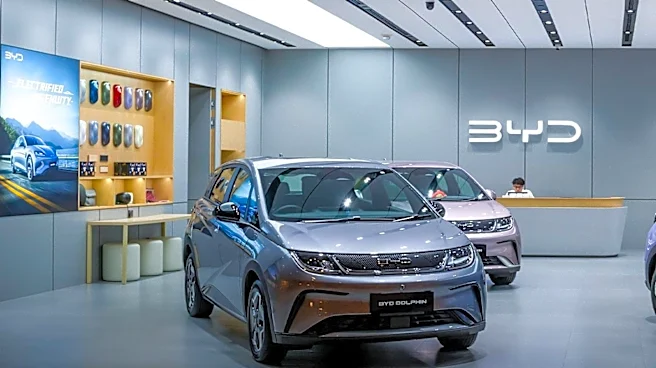
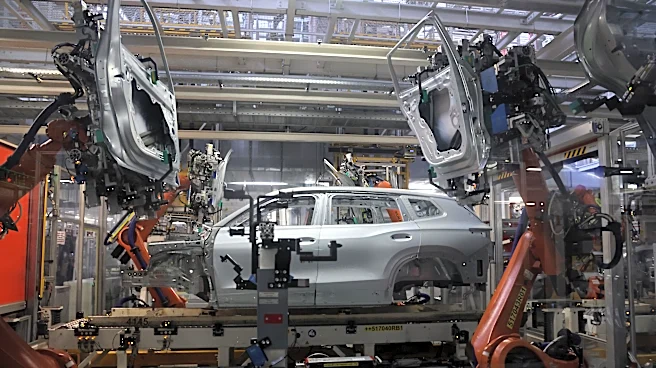
for 70 percent of global Grenadier sales. Ineos is actively evaluating potential U.S. assembly sites and expects to finalize a location within the next few months. The Grenadier and Quartermaster are presently assembled at Ineos's Hambach, France, plant, a former Mercedes-Benz facility. Ineos is also in discussions to sell the Hambach plant to Chinese automaker BYD, though production of its vehicles would continue there in the interim. The Grenadier, which began production in 2022, is known for its old-school off-road design, featuring body-on-frame construction, solid front and rear axles, a two-speed transfer case, and available locking differentials. It is powered by a BMW-sourced 3.0-liter turbocharged inline-six engine producing 281 horsepower, paired with an eight-speed automatic transmission. The Quartermaster pickup shares these mechanical specifications but includes a five-foot bed.
Why It's Important?
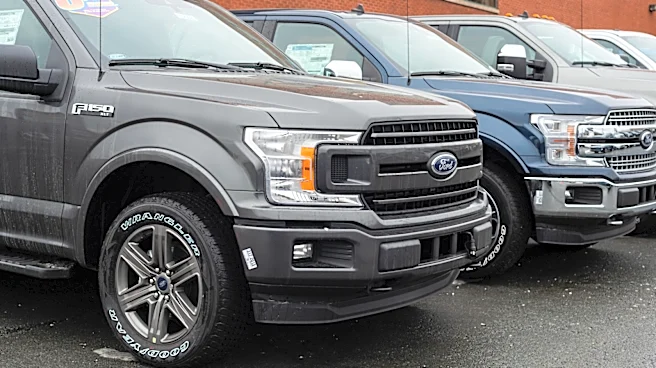
The decision by Ineos to establish U.S. production is significant for several reasons. Primarily, it represents a major cost-saving initiative for the growing brand, as manufacturing in its largest market can reduce logistical expenses and potentially mitigate the impact of import tariffs. The Quartermaster pickup, in particular, faces a 25-percent 'chicken tax' on imported light trucks in the U.S., which local production could help circumvent, making the vehicle more competitively priced. This move also signals Ineos's long-term commitment to the American market and its strategy to expand its production capabilities. For the U.S. economy, the establishment of a new automotive assembly plant will create jobs in manufacturing and related sectors, contributing to local economies in the chosen site. It also reflects a broader trend of foreign automakers investing in U.S. production to better serve American consumers and navigate trade policies. CEO Lynn Calder emphasized that U.S. production would enable the company to invest, expand, and reach more customers globally, underscoring the strategic importance of this decision.
What's Next?
In the immediate future, Ineos Automotive will focus on selecting a specific U.S. site for its new assembly facility, with an announcement expected within the coming months. Following site selection, the company will proceed with the construction and outfitting of the plant, aiming for production to commence in 2028. Concurrently, Ineos will continue negotiations regarding the sale of its Hambach, France, plant to BYD, ensuring a smooth transition for its European manufacturing operations while establishing its U.S. footprint. The company will also need to ramp up its supply chain and workforce development efforts in the U.S. to support the new production facility. The move could also lead to increased competition in the U.S. off-road vehicle market, potentially influencing pricing and feature offerings from established players. As production begins, consumers can expect to see a more stable supply of Grenadier and Quartermaster vehicles, potentially with more favorable pricing due to reduced import costs.
Beyond the Headlines
This move by Ineos highlights the increasing trend of global automotive manufacturers localizing production in key markets to enhance competitiveness and mitigate geopolitical and economic risks. The 'chicken tax' on imported light trucks has historically influenced manufacturing decisions for pickup trucks in the U.S., and Ineos's decision underscores its continued impact on market strategies. Furthermore, Ineos's commitment to its 'old-school' off-road vehicle design, even as it expands globally, suggests a belief in a niche market that values rugged capability over modern complexities. The company's ability to successfully integrate into the U.S. manufacturing landscape while maintaining its brand identity will be a key factor in its long-term success. This investment also reflects the ongoing evolution of the automotive industry, where new players are emerging and challenging established norms, often by focusing on specific market segments and leveraging strategic production locations.