








What's Happening?
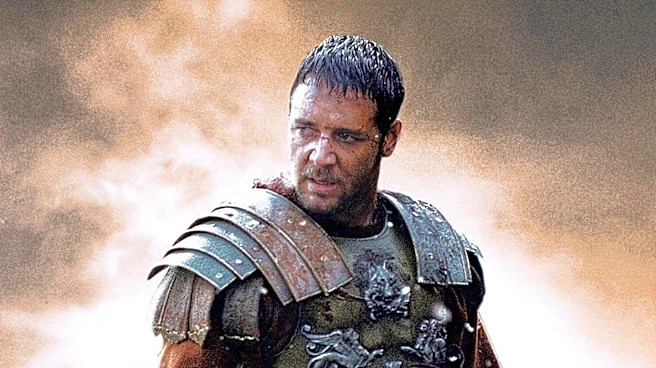
Ridley Scott's 2000 film 'Gladiator' is widely recognized as a seminal work in the historical action genre, often cited as one of the greatest 'sword-and-sandal' epics. The movie garnered significant critical and audience acclaim upon its release, earning
12 Academy Award nominations and winning five, including Best Picture and Best Actor for Russell Crowe. The film is noted for its strong performances, exhilarating battle sequences, and a compelling narrative of betrayal and revenge. Despite numerous attempts by other filmmakers over the past two decades to replicate its success, few have managed to achieve the same level of impact. Even other historical epics like 'Troy,' 'Pompeii,' and Scott's own 'Exodus: Gods and Kings' have not matched 'Gladiator's' grandeur and connection with audiences. However, Scott's 2005 film 'Kingdom of Heaven' is highlighted as a comparable work that fans of 'Gladiator' might appreciate.
Why It's Important?
The enduring legacy of 'Gladiator' underscores its significant influence on the historical action film genre and its continued relevance in popular culture. Its critical and commercial success set a high benchmark for subsequent films, demonstrating the audience's appetite for well-crafted historical epics. The film's ability to resonate with viewers years after its release highlights the power of strong storytelling, character development, and cinematic execution in creating lasting entertainment. For the film industry, 'Gladiator' serves as a case study in successful genre filmmaking, illustrating how a combination of compelling narrative, strong acting, and impressive visuals can lead to both critical accolades and widespread popularity. Its continued discussion and comparison to newer films indicate its status as a cultural touchstone, influencing how historical dramas are conceived and received.
Beyond the Headlines
The success of 'Gladiator' also reflects a broader cultural fascination with ancient history and epic narratives. The film's exploration of themes such as honor, revenge, and the struggle against tyranny taps into universal human experiences, contributing to its timeless appeal. The emphasis on Scott's director's cut for 'Kingdom of Heaven' further highlights the importance of a filmmaker's complete vision in delivering a comprehensive and impactful story, suggesting that studio interference can sometimes dilute the artistic integrity and audience reception of a film. This preference for the director's cut among fans and critics points to a deeper appreciation for artistic autonomy and the nuanced storytelling that can be lost in theatrical releases.