




What's Happening?
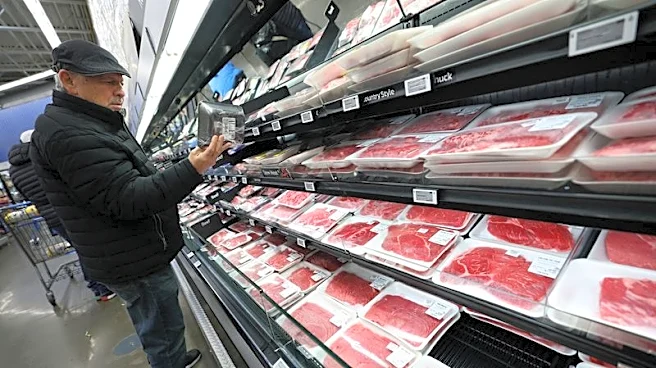
The Department of Justice (DOJ) has expanded its investigation into record-high beef prices to include eight major grocery retailers: Kroger, Walmart, Publix, Albertsons, Aldi, Ahold Delhaize, Costco, and Amazon. This expansion follows an earlier investigation that
focused on the nation's largest meatpacking companies. The DOJ's Antitrust Division is requesting information dating back to 2020, including details on beef prices, profit margins, operating expenses, and purchasing agreements. The investigation aims to determine whether business practices or a lack of competition have contributed to the rising retail prices of beef. The department has clarified that this inquiry does not necessarily mean the retailers have violated federal law, and no accusations of wrongdoing have been made.
Why It's Important?
This expanded investigation signals a significant federal scrutiny of the entire beef supply chain, from processing to retail. Beef and veal prices have risen considerably faster than overall inflation, with increases of 9.4% in the 12 months ending in July, compared to a 3.4% increase in overall consumer prices. This disparity has raised concerns about potential anti-competitive practices that could be harming consumers. The investigation could lead to significant changes in how major grocery retailers price and procure beef, potentially impacting their profit margins and market strategies. For consumers, the outcome could mean more competitive pricing or, conversely, further market consolidation if no wrongdoing is found. The focus on major retailers underscores the government's concern about market concentration and its effect on everyday household expenses.
What's Next?
The DOJ's Antitrust Division will analyze the extensive data requested from the eight major grocery retailers. This process could take several months or longer. Depending on the findings, the investigation could lead to formal charges, civil lawsuits, or regulatory changes aimed at increasing competition in the beef retail market. Retailers may face increased legal and compliance costs as they cooperate with the inquiry. The outcome could also influence future antitrust enforcement actions in other sectors of the food industry, particularly where consumer prices have seen significant increases. Analysts anticipate tight cattle supplies and elevated beef prices to continue into 2027, making the findings of this investigation particularly relevant for both consumers and the industry.
Beyond the Headlines
This investigation highlights broader concerns about market power and consolidation within the U.S. food industry. The focus on both meatpackers and retailers suggests a comprehensive look at potential bottlenecks and anti-competitive behaviors across the supply chain. Beyond direct price manipulation, the inquiry could uncover issues related to supply chain transparency, contract negotiations between retailers and suppliers, and the impact of large-scale purchasing power on smaller competitors. The investigation also touches upon the economic pressures faced by consumers due to inflation and the role of corporate practices in exacerbating these pressures. It underscores the ongoing debate about the balance between corporate efficiency and fair market competition, and the government's role in ensuring a level playing field for businesses and fair prices for consumers.