









What's Happening?
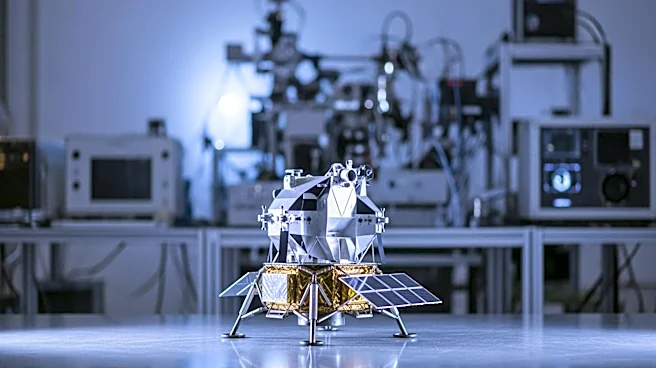
Astrobotic has showcased its Griffin-1 lunar lander, which is set to undergo environmental testing at NASA's Jet Propulsion Laboratory in California. The lander, designed to carry a 650 kg payload, will integrate with Astrolab's FLIP rover at Cape Canaveral
before its launch later this year. The Griffin-1 mission follows Astrobotic's previous Peregrine-1 mission, which faced technical issues. The new lander incorporates lessons learned, featuring a dual redundant valve system to prevent similar failures. The mission is part of NASA's Moon Base program, aiming to establish permanent infrastructure on the Moon.
Why It's Important?
The Griffin-1 mission represents a critical step in advancing lunar exploration and establishing a sustainable human presence on the Moon. By addressing previous technical challenges, Astrobotic aims to enhance the reliability of lunar landers, which is essential for future missions. The collaboration with NASA and the integration of new technologies could pave the way for more ambitious lunar projects, including resource utilization and habitat construction. This mission also highlights the role of private companies in supporting national space objectives, fostering innovation and reducing costs.
What's Next?
Astrobotic plans to launch the Griffin-1 mission aboard a SpaceX Falcon Heavy rocket in late 2026. The mission will test new technologies and gather data to inform future lunar exploration efforts. As part of NASA's Moon Base program, the mission's success could accelerate the development of lunar infrastructure, supporting long-term human activities on the Moon. The collaboration between Astrobotic and NASA may lead to further partnerships, advancing the goals of both organizations in space exploration.