


What's Happening?
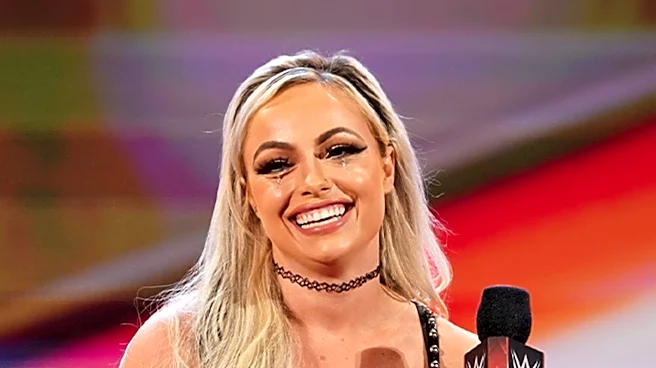
Chelsea Green, upon her return to WWE, successfully reestablished herself as a heel character, evolving into a fan favorite. Initially portraying an annoying 'Karen' persona known for throwing tantrums, Green infused comedy into the role, making it increasingly
funny and relatable to the audience. She explained that her approach was to create a character that was the opposite of a typical 'hot girl,' aiming for a self-deprecating and humorous portrayal. This unique take on a villainous character, combined with her wrestling style, resonated with fans, leading to widespread praise for WWE's decision to position her for a potential WWE Women's Championship win at SummerSlam. Green attributes her success to a 'perfect storm' of fans appreciating both her annoying character and her fresh perspective on wrestling.
Why It's Important?
Chelsea Green's success in transforming a heel character into a fan favorite highlights the evolving dynamics of audience engagement in professional wrestling. Her ability to infuse humor and self-awareness into an otherwise unlikable persona demonstrates the importance of nuanced character development in capturing the attention and affection of the U.S. wrestling audience. This approach can serve as a blueprint for other wrestlers and promotions looking to create compelling characters that transcend traditional good-versus-evil tropes. The positive reception of her 'Karen' character, leading to calls for a championship run, indicates a shift in fan preferences towards more complex and entertaining personalities, which can influence future booking decisions and creative directions within WWE and the broader wrestling industry. This also impacts merchandise sales and viewership as fans connect more deeply with unique characters.
What's Next?
Given Chelsea Green's growing popularity and the positive fan reception, it is highly probable that WWE will continue to feature her prominently in storylines. Her 'Karen' character, now a fan favorite, is likely to be involved in more significant matches and feuds, potentially leading to a WWE Women's Championship opportunity, as suggested by fan sentiment regarding SummerSlam. The creative team may further develop her character, exploring new comedic angles or even a gradual transition towards a more heroic role, depending on audience reaction. Her unique approach to promos, which she has described as less 'wrestling-y,' could also influence how other wrestlers craft their on-screen personas, potentially leading to a broader shift in WWE's storytelling style to better connect with contemporary pop culture trends.
Beyond the Headlines
Chelsea Green's journey from a traditional heel to a beloved character underscores a significant shift in how professional wrestling audiences consume and appreciate content. In an era dominated by social media and instant feedback, characters that offer depth, humor, and a fresh perspective often resonate more deeply than one-dimensional villains. Her success demonstrates that authenticity, even within a fictional persona, can forge a strong connection with fans. This trend suggests that wrestling promotions might increasingly prioritize character development that allows for evolution and audience interaction, moving beyond rigid archetypes. It also highlights the power of wrestlers to shape their own narratives and connect with fans on a personal level, influencing the future of character creation and storytelling in the entertainment industry.