





What's Happening?
WHOOP, a company known for its health and performance tracking wearables, has launched its new Meridian collection. This collection aims to integrate health-tracking technology with a jewelry-inspired aesthetic, moving beyond the traditional fitness tracker
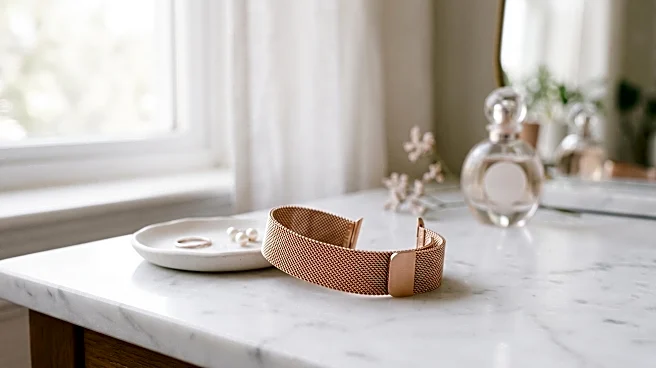
appearance. The Meridian collection features a Milanese stainless steel mesh band, a design historically used in watchmaking and jewelry, offering a refined bracelet-like silhouette. Available in Gold, Rose Gold, Alloy, and Matte Black finishes, the bands are designed for versatility, allowing them to be worn as standalone pieces or layered with other jewelry. The design emphasizes comfort with a tapered silhouette and an adjustable magnetic closure, creating a seamless look. This initiative reflects a growing consumer expectation for technology to blend seamlessly into daily life and fashion. The collection is compatible with WHOOP 5.0 and WHOOP MG devices, maintaining standard tracking functionality when properly fitted. While suitable for workouts, its primary focus is elevated everyday and occasion wear.
Why It's Important?
The introduction of the Meridian collection signifies a notable shift in the wearable technology market, emphasizing aesthetics alongside functionality. This move by WHOOP addresses a consumer segment that desires health tracking without compromising personal style, particularly for those who find traditional athletic bands less suitable for various social or professional settings. By offering a more fashionable alternative, WHOOP aims to broaden the appeal of its devices, potentially attracting users who prioritize design as much as data. This could lead to increased adoption of continuous health monitoring among individuals who previously resisted wearables due to their utilitarian appearance. The collection's focus on integrating into existing jewelry collections also highlights a trend where technology is becoming an integral, yet discreet, part of personal expression and luxury. This could influence other wearable tech companies to invest more in design-forward products, fostering innovation in both aesthetics and user experience within the industry.
What's Next?
The success of WHOOP's Meridian collection could prompt other wearable technology companies to explore similar design-centric approaches, potentially leading to a broader trend of fashion-integrated health trackers. Consumers can expect to see more options that blend advanced health monitoring with sophisticated aesthetics, moving away from purely functional designs. WHOOP may further expand its Meridian line with additional materials, styles, and collaborations to cater to diverse fashion preferences. The company will likely monitor user adoption and feedback to refine future iterations and marketing strategies. This development could also encourage partnerships between tech companies and fashion brands, creating new product categories that bridge the gap between wellness, technology, and high fashion. The industry may also see increased competition in offering wearables that are not only technologically advanced but also visually appealing for everyday wear and special occasions.
Beyond the Headlines
The Meridian collection by WHOOP touches upon deeper implications regarding the evolving relationship between technology, personal identity, and societal norms. By making health trackers more aesthetically pleasing, WHOOP is subtly challenging the perception that technology must look 'technical.' This shift could normalize continuous health monitoring across a wider demographic, integrating it more deeply into daily routines and social contexts. It also raises questions about the future of personal data and privacy, as more individuals seamlessly incorporate data-collecting devices into their lives. The collection reflects a cultural movement where wellness is increasingly intertwined with luxury and personal style, suggesting that health data is becoming another facet of self-optimization and presentation. This convergence could lead to new ethical considerations regarding the display and interpretation of personal health metrics in social settings, as wearables become less about performance and more about lifestyle.