







What's Happening?
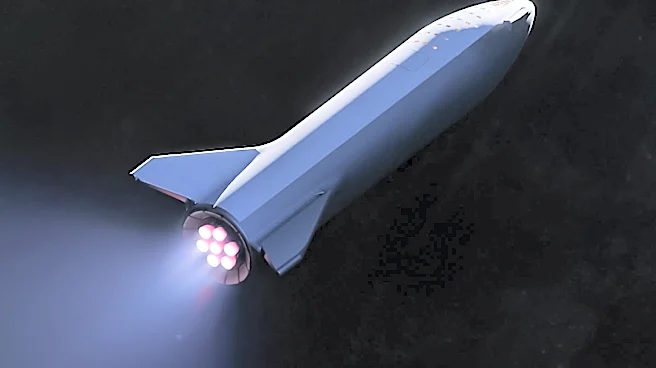
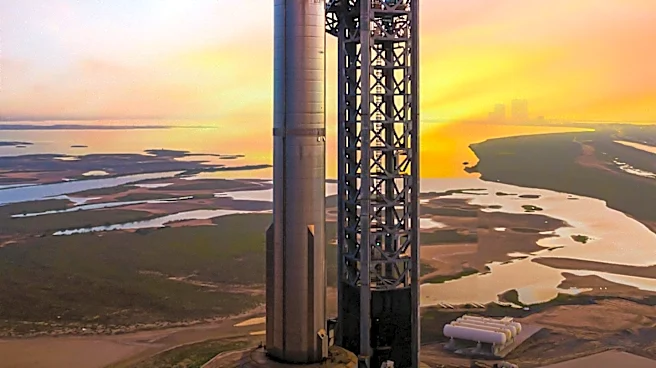
SpaceX is set to launch its thirteenth Starship flight on July 16, 2026, from Starbase in Texas. This mission will carry 20 Starlink V3 satellites, marking a significant advancement in SpaceX's satellite constellation capabilities. The V3 satellites offer
enhanced downlink and uplink capacities, with each satellite providing 1 terabit per second of downlink and 160 gigabits per second of uplink capacity. This is a substantial improvement over the previous V2 Mini satellites. The mission follows the twelfth flight in May 2026, which faced booster engine failures, prompting an investigation by the Federal Aviation Administration. The upcoming flight incorporates several hardware upgrades to address these issues, including improved Raptor re-light reliability and updated engine alarms. Additionally, six of the V3 satellites will be equipped with cameras to inspect Starship's heat shield post-reentry, providing real-time data on the vehicle's thermal protection system.
Why It's Important?
The launch of the Starlink V3 satellites represents a pivotal moment for SpaceX's strategy to expand its internet network. The enhanced capacity of these satellites is expected to significantly boost the Starlink constellation's overall service speeds and capacity. A single Starship launch can add 60 terabits per second of capacity, which is more than 20 times the capacity added by a Falcon 9 launch of traditional Starlink satellites. This efficiency is crucial for SpaceX's rapid constellation expansion plans. The successful deployment of these satellites could enhance global internet connectivity, particularly in underserved areas, and strengthen SpaceX's position in the competitive satellite internet market. The mission also demonstrates SpaceX's commitment to addressing previous technical challenges, which is vital for maintaining regulatory compliance and ensuring the reliability of future launches.
What's Next?
Following the launch, SpaceX will monitor the performance of the Starlink V3 satellites and the Starship's upgraded systems. The data collected from the cameras on the V3 satellites will be crucial for assessing the effectiveness of the heat shield and other hardware improvements. If successful, this mission could pave the way for more frequent and reliable Starship launches, further accelerating the deployment of the Starlink network. The results of this mission will likely influence SpaceX's future launch schedules and strategies, as well as its interactions with regulatory bodies like the FAA. The company will continue to refine its technology and operational procedures to enhance the safety and efficiency of its space missions.