


What's Happening?
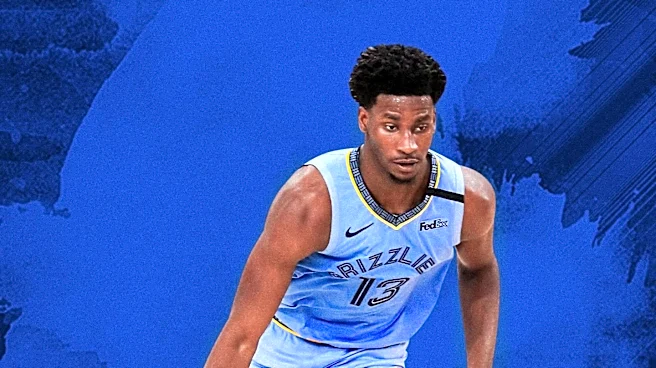
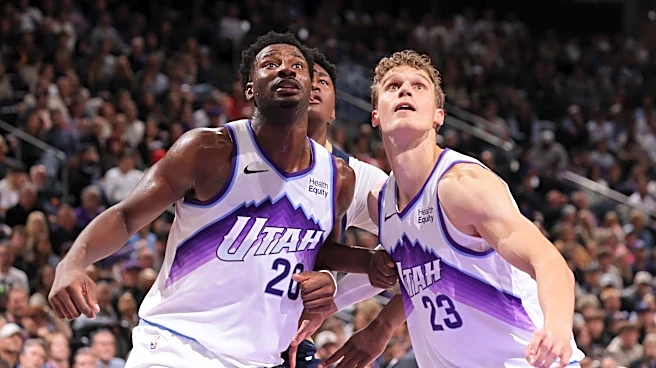
Jaren Jackson Jr., a key player for the Utah Jazz, has torn the MCL in his right knee during a recent game against Memphis. The injury occurred during Monday's 110-105 loss, and Jackson Jr. is expected to be reevaluated in six weeks, around December 8.
This marks another significant absence for the former Defensive Player of the Year, who was acquired by the Jazz in February in a trade that sent three first-round picks to the Grizzlies. Since joining Utah, Jackson Jr. has played only seven regular-season games. The Jazz are currently facing a depleted frontcourt, with Lauri Markkanen day-to-day due to a sprained right wrist, Jusuf Nurkic sidelined with a foot injury, and Jaxson Hayes dealing with a shoulder issue. This string of injuries leaves the team in a challenging position early in the season.
Why It's Important?
The injury to Jaren Jackson Jr. is a significant blow to the Utah Jazz, impacting their immediate competitive outlook and long-term strategic planning. The Jazz invested heavily in Jackson Jr., surrendering three first-round picks, with the expectation that he would be a cornerstone for their postseason aspirations. His extended absence, coupled with other frontcourt injuries, severely weakens the team's defensive capabilities and overall roster depth. This situation creates pressure on the Jazz front office to consider potential trades for another big man, despite having previously traded Walker Kessler for draft flexibility. Such a move would be a gamble, potentially sacrificing future assets for short-term relief, especially given the uncertainty surrounding the return dates of their injured players. The team's performance in the coming weeks, particularly against upcoming opponents like San Antonio, New Orleans, Dallas, and Minnesota, will be crucial in determining the urgency of any roster changes.
What's Next?
Jaren Jackson Jr. is scheduled for reevaluation around December 8, which will provide a clearer timeline for his potential return, though it is not a guaranteed return date. In the interim, the Utah Jazz will need to manage their depleted frontcourt with existing players like Mo Bamba, who recently had a promising performance against Memphis. The team's front office will likely explore options for a low-cost veteran to absorb minutes and protect the paint, rather than immediately committing to another significant trade involving draft capital. Jusuf Nurkic is due for reevaluation in early November, and December 15 marks the trade eligibility date for many players signed during the offseason, offering the Jazz more flexibility to assess their options. The team's performance in the upcoming games will heavily influence the pressure on the front office to make a move, as mounting losses could make patience harder to justify.
Beyond the Headlines
The recurring injury issues for Jaren Jackson Jr. raise broader questions about player health management and the long-term viability of significant investments in players with a history of injuries. For the Jazz, this situation highlights the delicate balance between building for the future through draft picks and competing in the present. The temptation to make a 'desperation' trade to cover an uncertain stretch could have lasting consequences, potentially setting the franchise back further than Jackson Jr.'s current injury. This scenario also underscores the inherent risks in professional sports, where a single injury can derail carefully constructed team plans and impact financial and strategic decisions for years. The Jazz's approach in navigating this crisis will serve as a case study in how NBA franchises manage player health, roster construction, and the pressure to perform.