
What's Happening?
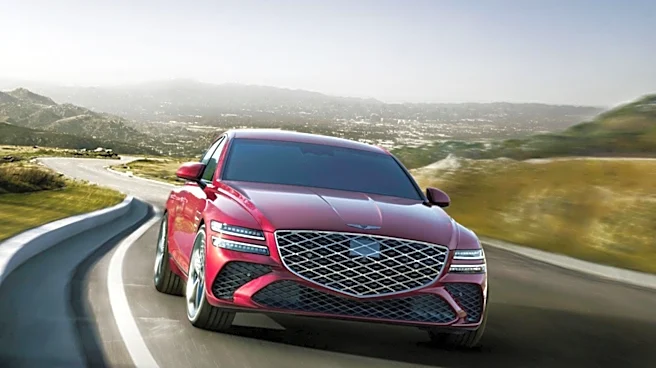
The Genesis G90, a large luxury sedan, demonstrates a better-than-average resale value compared to its category. According to iSeeCars data, the G90 depreciates by 52.4% over five years, retaining 47.6%
of its original value. This figure is slightly better than the average five-year depreciation of 54% for the large luxury car category. While other sources like CarEdge and Kelly Blue Book (KBB) provide slightly varying numbers, the general consensus indicates that the G90 performs favorably in terms of value retention. For instance, KBB's data suggests a 58.2% depreciation for a 2021 Genesis G90 after five years, which is still competitive within the segment. The G90 also shows better resale value than some direct competitors, such as the Audi A8, which depreciates by 57.7% over five years according to iSeeCars.
Why It's Important?
The resale value of a luxury vehicle like the Genesis G90 is a critical factor for consumers, as depreciation significantly impacts the total cost of ownership. A stronger resale value means owners lose less money over time, making the vehicle a more financially sound investment. For Genesis, a relatively newer entrant in the luxury market, demonstrating competitive or superior resale value against established rivals like Mercedes-Benz and Audi is crucial for building brand reputation and consumer trust. This performance can attract buyers who are conscious of long-term value, potentially increasing market share for the brand. Furthermore, a good resale value can influence leasing terms and insurance costs, benefiting both consumers and the automotive finance industry. It also signals to the broader market that Genesis vehicles are perceived as durable and desirable, even after several years of ownership.
What's Next?
The Genesis G90's favorable resale value could lead to increased consumer confidence and potentially higher sales volumes for the model. Genesis may leverage this data in its marketing campaigns to highlight the G90's value retention as a key selling point, especially when competing with more established luxury brands. Continued strong resale performance could also encourage Genesis to expand its luxury sedan offerings, confident in the long-term value proposition of its vehicles. For consumers, this information provides a valuable metric when considering a luxury car purchase, prompting them to look beyond initial price and consider depreciation as a significant financial factor. The automotive industry will likely continue to monitor these trends, as resale value increasingly becomes a differentiator in the competitive luxury vehicle market.
Beyond the Headlines
The Genesis G90's strong resale value reflects more than just a financial metric; it indicates a growing acceptance and recognition of the brand's quality and desirability in the luxury segment. Historically, newer luxury brands have struggled to match the resale values of established European marques. The G90's performance suggests a shift in consumer perception, where design, comfort, and refinement are being valued alongside brand heritage. This could have broader implications for the luxury automotive market, potentially fostering greater competition and innovation as brands strive to offer vehicles that not only impress initially but also retain their value over time. It also highlights the evolving criteria consumers use to define 'luxury,' moving beyond mere brand prestige to include practical considerations like long-term financial viability. This trend could encourage other emerging luxury brands to focus more on product longevity and market appeal to enhance their resale prospects.