




What's Happening?
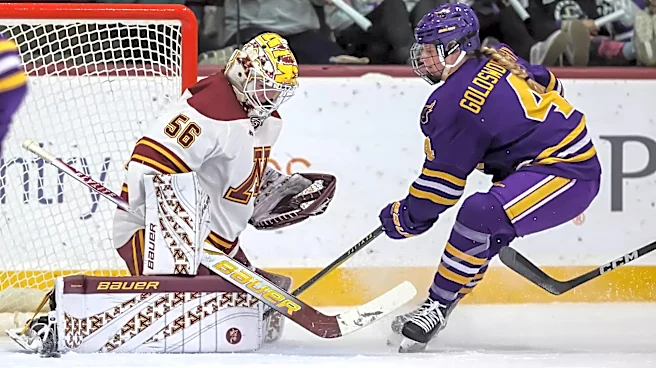
The University of Vermont (UVM) women’s hockey team was defeated by the seventh-ranked Minnesota Duluth Bulldogs in overtime with a final score of 3-2. The game took place on Saturday, following UVM's upset victory against the Bulldogs on Friday, which
resulted in a split weekend series between the two teams. Natalie Zarcone and Hilary Wilkin scored the two goals for Vermont, with Wilkin's goal marking the first of her career. The UVM team is now scheduled to play their next game on the road against Franklin Pierce, beginning on Friday.
Why It's Important?
This outcome is significant for the UVM women's hockey program as it demonstrates their ability to compete with highly-ranked teams, even in a loss. Splitting a weekend series with a top-10 opponent like the Minnesota Duluth Bulldogs can boost team morale and provide valuable experience for players, especially for newer members like Hilary Wilkin, who scored her first career goal. For the Bulldogs, securing a win after an earlier upset loss helps maintain their national ranking and competitive standing. The result also impacts the overall season trajectory for both teams, influencing their conference standings and potential for postseason play. For college sports enthusiasts, it highlights the competitive nature of NCAA women's hockey.
What's Next?
The UVM women's hockey team will next face Franklin Pierce on the road, with games scheduled to begin on Friday. This upcoming series will be an opportunity for UVM to rebound from their overtime loss and continue to build momentum in their season. For the Minnesota Duluth Bulldogs, their schedule will likely involve continued competition against other high-ranking teams as they aim to maintain their position within the top tier of collegiate women's hockey. Both teams will be looking to refine their strategies and performance in subsequent matches as the season progresses, with an eye towards conference championships and national tournament qualifications.
Beyond the Headlines
The performance of teams like UVM against nationally ranked opponents underscores the growing competitiveness and talent within women's collegiate hockey. Such matchups not only provide exciting sports entertainment but also contribute to the development of athletes who may go on to play professionally or represent their countries in international competitions. The experience gained from playing in high-pressure overtime games against top-tier teams is invaluable for player development, fostering resilience, teamwork, and strategic thinking. Furthermore, the visibility of these games helps to elevate the profile of women's sports, encouraging greater participation and support at all levels.