







What's Happening?
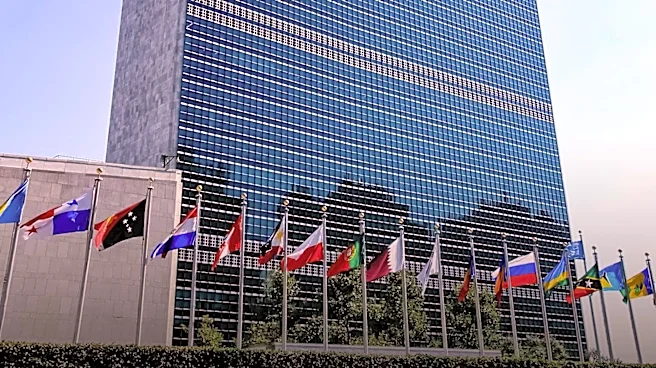
The United Nations Global Compact has released a new Sustainable Procurement Implementation Framework designed to assist companies in integrating sustainability into their daily purchasing decisions. This framework addresses a common gap where procurement
teams often lack practical guidance despite governments advancing regulations for more responsible supply chains. Developed by the UN Global Compact’s Coalition for Sustainable Procurement with input from various companies and expert groups, the framework outlines an approach for assessing a company's current maturity in sustainability, establishing governance structures, aligning sourcing choices with sustainability priorities, strengthening supplier relationships, and tracking performance over time. The framework is intended to complement existing regulations and standards by focusing on actionable steps companies can take, rather than solely on compliance. It is built to be adaptable across different industries, company sizes, and regions, aiming to benefit both large multinational corporations and smaller suppliers.
Why It's Important?
This initiative is significant for U.S. businesses and global supply chains as it provides a standardized approach to sustainable procurement, which can influence how companies operate and interact with their suppliers. By offering practical guidance, the framework can help U.S. companies navigate the increasing complexity of environmental, social, and governance (ESG) regulations and consumer demands for ethical sourcing. Companies that adopt this framework may gain a competitive advantage by enhancing their brand reputation, reducing supply chain risks, and potentially lowering operational costs through more efficient and sustainable practices. Conversely, businesses that fail to integrate sustainable procurement principles might face scrutiny from regulators, investors, and consumers, potentially leading to reputational damage or loss of market share. The framework's emphasis on strengthening supplier relationships also suggests a broader shift towards collaborative sustainability efforts across entire value chains, impacting how U.S. companies manage their global networks.
What's Next?
The UN Global Compact aims to make sustainable procurement a standard practice worldwide, with CEO Sanda Ojiambo indicating that the organization will collaborate with governments, businesses, and partners to encourage its adoption. Companies are expected to review and potentially integrate this framework into their procurement strategies. The framework's design to work across industries and company sizes suggests a broad push for its implementation, which could lead to increased demand for sustainable products and services. As regulations evolve, procurement teams are increasingly expected to translate sustainability expectations into daily decisions, and this framework is designed to support that transition. The ongoing efforts to promote and implement this framework will likely shape future procurement practices and supply chain management globally, including within the U.S.
Beyond the Headlines
The introduction of this framework highlights a deeper trend towards embedding sustainability into the core operational fabric of businesses, moving beyond mere compliance to proactive integration. It underscores the ethical dimension of procurement, where purchasing decisions are not just about cost and quality but also about environmental and social impact. This shift could foster greater transparency and accountability throughout global supply chains, potentially leading to a re-evaluation of sourcing practices and a preference for suppliers who demonstrate strong sustainability commitments. The framework also implicitly acknowledges the power of procurement as a lever for systemic change, capable of driving widespread adoption of sustainable practices across diverse industries and geographies. This could lead to a more resilient and ethically conscious global economy, where businesses are increasingly judged not just on their profits, but also on their positive contributions to society and the environment.