








What's Happening?
AI trading bots are increasingly being adopted by retail investors across global markets, significantly influencing investment behavior. According to industry analysts and fintech researchers, the adoption of AI trading tools in cryptocurrency markets has
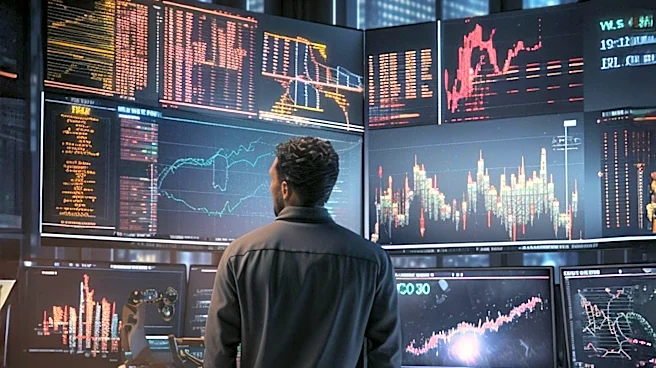
increased by over 40% year-on-year, while automated trading system usage in stock markets has risen by approximately 28%. This trend marks a shift from discretionary trading to data-driven, model-based decision-making. AI trading bots, powered by machine learning models and real-time data analysis, are credited with improving trading efficiency and reducing emotional decision-making. Fintech platforms are simplifying onboarding processes to make these tools more accessible to retail investors, allowing them to configure AI trading strategies based on risk tolerance and capital allocation.
Why It's Important?
The rise in AI trading bot adoption signifies a major shift in retail investment strategies, moving towards automation and data-driven decision-making. This trend could democratize access to sophisticated trading tools, traditionally reserved for institutional investors, thereby leveling the playing field. The increased efficiency and reduced emotional bias in trading could lead to more stable investment outcomes for retail investors. Additionally, the growth of AI trading tools is likely to drive further innovation in the fintech sector, as companies compete to offer more advanced and user-friendly solutions. This could result in a more dynamic and competitive market environment, benefiting investors with better tools and strategies.
What's Next?
As AI trading tools continue to gain traction, fintech companies are expected to focus on enhancing risk management features and strategy optimization. This includes incorporating dynamic risk assessment, volatility-based strategy adjustments, and multi-asset portfolio rebalancing. The development of open strategy ecosystems, where developers can share and test algorithmic trading models, is also anticipated. Over the next few years, AI-powered automated trading platforms are likely to become a significant growth segment within the fintech industry, with infrastructure scalability and strategy ecosystems serving as key competitive differentiators.