


What's Happening?
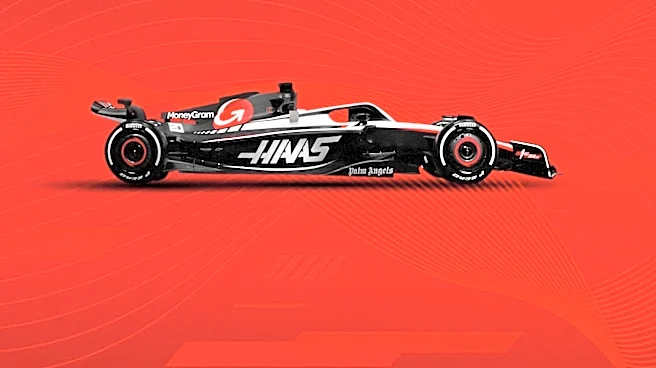
The Haas F1 team is grappling with significant inconsistencies in the performance of its car components, leading to an uneven playing field between its two drivers, Esteban Ocon and Oliver Bearman. Despite Bearman's statistical lead over Ocon in points,
qualifying, and race finishes, both drivers and Team Principal Ayao Komatsu acknowledge that these figures do not fully reflect the reality. The team has struggled to provide both drivers with identical performance levels from their VF-26 cars, with Ocon particularly vocal about receiving less optimal parts at various points in the season. This issue has forced Haas to frequently swap components between cars in an attempt to identify and rectify the discrepancies, making it difficult to accurately assess individual driver performance.
Why It's Important?
This situation is critical for Haas as it directly impacts their ability to fairly evaluate driver talent and make informed decisions about their future lineup. The lack of consistent car performance means that raw statistics, such as points scored or qualifying results, cannot be solely relied upon to judge a driver's true capability. This could lead to misjudgments in contract negotiations and driver development, potentially hindering the team's long-term competitiveness. For the drivers, it creates an environment of uncertainty and frustration, as their results can be heavily influenced by factors beyond their control. The challenge of ensuring component consistency also reflects deeper operational or manufacturing issues within the team, which could affect their overall performance and standing in the highly competitive Formula 1 championship.
What's Next?
Haas F1 team will continue its efforts to identify and resolve the underlying causes of the inconsistent component performance. Team Principal Ayao Komatsu has indicated that while some issues have been addressed, others remain. The team's ability to provide both drivers with equally performing cars will be crucial for the remainder of the season, especially as they approach decisions regarding their driver lineup for upcoming seasons. Ocon, in particular, needs to demonstrate consistent strong performances, similar to his recent showing in Budapest, to secure his position. The team's success in rectifying these inconsistencies will not only impact driver evaluations but also their overall competitive standing in Formula 1.
Beyond the Headlines
The ongoing struggle with component consistency at Haas highlights a broader challenge in motorsports, where technological precision and manufacturing quality are paramount. Beyond the immediate impact on driver performance and team morale, this issue raises questions about the team's supply chain management, quality control processes, and potentially its financial resources to invest in higher-grade components or more rigorous testing. The situation also underscores the psychological toll on drivers who must contend with variables outside their control, potentially affecting their confidence and focus. For Formula 1 as a whole, it emphasizes the importance of equitable equipment within a team to ensure fair competition and accurate assessment of driver skill, which is fundamental to the sport's integrity.