






What's Happening?
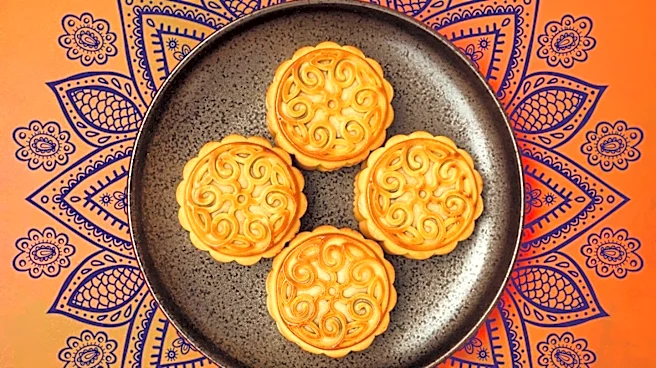
San Jose State University (SJSU) recently hosted a mooncake workshop at its Campus Community Garden, led by culinary programs specialist and chef educator Linh Vong. The event taught dozens of students how to make mooncakes and educated them on the cultural
history behind the traditional pastry. Mooncakes, typically filled with lotus seed or red bean paste, are central to the Mid-Autumn Festival, also known as the Moon Festival. This festival is a Chinese tradition, with similar celebrations observed in other Asian countries like Japan (Tsukimi), South Korea (Chuseok), and Vietnam (Tet Trung Thu). The workshop provided pre-made dough, fillings, and molds, allowing participants to create both snowskin and traditional mooncakes with various flavors such as red bean, black sesame, pandan, and mung bean. The Mid-Autumn Festival, which marked its first full moon of fall on September 25, emphasizes family reunion and the changing seasons.
Why It's Important?
This event is important as it highlights the growing cultural diversity and educational initiatives within U.S. universities. By hosting workshops like this, institutions like SJSU foster a deeper understanding and appreciation of global traditions among their student body. It provides an accessible way for students, many of whom may not have prior exposure, to engage with and learn about different cultural practices, such as the significance of the Mid-Autumn Festival and the art of making mooncakes. This not only enriches the campus experience but also promotes inclusivity and cross-cultural dialogue. For students of Asian heritage, it offers a connection to their roots and a platform to share their cultural identity. The workshop also underscores the importance of food as a medium for cultural exchange and education, making traditional practices tangible and enjoyable for a wider audience.
What's Next?
Following the success of the mooncake workshop, the SJSU Campus Community Garden is scheduled to host its next free event, 'Plant it, Plate it,' on October 21. This upcoming event will focus on teaching students how to grow their own herbs and prepare a meal, continuing the theme of culinary education and practical skills. Such initiatives are likely to continue, further integrating cultural and practical learning experiences into the university's extracurricular offerings. The positive reception of the mooncake workshop suggests a demand for more events that combine cultural education with hands-on activities, potentially leading to an expansion of similar programs in the future. These events contribute to a vibrant campus life and provide ongoing opportunities for student engagement and learning beyond traditional academics.
Beyond the Headlines
The mooncake workshop at SJSU delves deeper than just culinary instruction; it serves as a powerful tool for cultural preservation and transmission in a multicultural society. In an increasingly globalized world, such events play a crucial role in ensuring that traditional practices and their underlying narratives are not lost, especially among younger generations and those in diaspora communities. The story shared by Linh Vong about the legendary warrior Hou Yi and his wife Change’e, who became the goddess of the moon, illustrates how food items like mooncakes are imbued with rich historical and mythological significance. By understanding these backstories, participants gain a more profound appreciation for the cultural artifacts they are creating and consuming. This fosters a sense of shared heritage and promotes empathy and understanding across different cultural backgrounds, contributing to a more cohesive and culturally aware community.