



What's Happening?
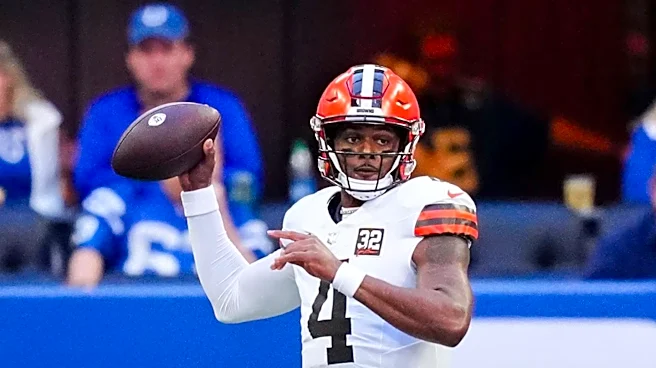
The Cleveland Browns are expected to cut quarterback Deshaun Watson on March 11, 2027, when the new league year begins. This anticipated move stems from a contract restructure in December 2024, which added a 'dummy year' for 2027 to Watson's deal. This 'dummy year' includes
a minimum base salary and a substantial roster bonus in 2029, designed to facilitate a post-June 1st cut. A contract restructure, in the NFL, involves converting a player's base salary or roster bonus into a signing bonus, providing short-term salary cap relief for the team without reducing the player's overall pay. This strategy allows the team to spread the remaining 'dead cap' over two years, effectively managing their financial obligations.
Why It's Important?
This contract manipulation strategy highlights the complex financial engineering prevalent in the NFL, particularly concerning high-value player contracts. For the Cleveland Browns, it represents a calculated move to manage a significant financial commitment while maintaining flexibility for future roster decisions. The 'dummy year' and post-June 1st cut mechanism are critical tools for teams to mitigate the immediate salary cap impact of releasing a player with a large contract. This approach allows teams to free up cap space in the short term, enabling them to pursue other talent or address roster needs, even if it means deferring some financial burden to later years. It also underscores the reality that even highly paid players can become cap casualties if their performance does not align with their financial impact.
What's Next?
As the March 11, 2027, date approaches, the Cleveland Browns will likely continue to evaluate their roster and financial situation. The anticipated cut of Deshaun Watson will free up significant salary cap space, which the team can then utilize to sign new players, extend existing contracts, or address other team needs. The 'dead cap' resulting from Watson's contract will be spread over the 2027 and 2028 seasons, impacting the team's financial flexibility in those years. Other NFL teams, particularly those known for aggressive contract management like the Saints and Eagles, may adopt similar 'dummy year' strategies, further evolving the landscape of NFL contract negotiations and salary cap management.
Beyond the Headlines
The use of 'dummy years' and complex contract restructures in the NFL reflects a broader trend of sophisticated financial management in professional sports. While these strategies offer teams short-term flexibility, they can also create long-term financial obligations and 'dead cap' issues that must be carefully managed. This practice raises questions about the transparency of player contracts and the potential for teams to push financial burdens into the future, impacting future roster construction and competitiveness. It also highlights the constant tension between a player's guaranteed earnings and a team's need for financial agility, often leading to creative contractual solutions that benefit both parties in the short term but carry significant implications down the line.