
What's Happening?
Minimalism, an art movement from the 1960s emphasizing physical presence over image, has significantly influenced contemporary design, extending to commercial restrooms. This approach focuses on functionality,
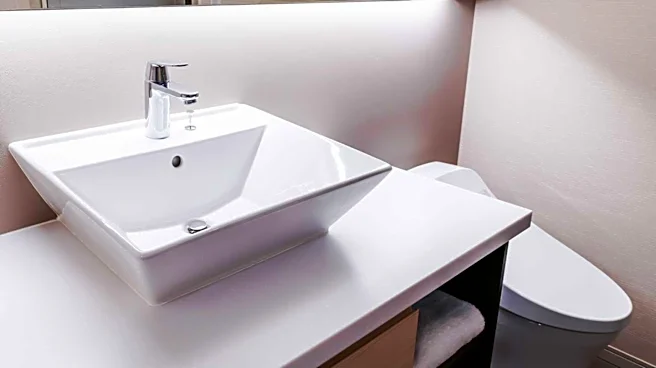
hygiene, and user well-being, moving beyond mere aesthetics. In well-designed commercial restrooms, minimalism is evident through uncluttered countertops, integrated fixtures, and clean lines, creating a sense of spaciousness and order. This design philosophy aims to make restrooms feel premium and intentional, rather than just utilitarian spaces. Key elements include touchless technology, such as Saniflow’s All-in-One faucet system that combines a hand dryer, soap dispenser, and water tap into a single unit, reducing visual clutter and enhancing the user experience. The U-Flow hand dryer, with its HEPA filtration and antimicrobial protection, and the Red Dot Award-winning BabyMedi baby changing stations, which integrate discreetly into the wall, exemplify how minimalist design can incorporate advanced hygiene and functionality.
Why It's Important?
The adoption of minimalist design in commercial restrooms has significant implications for various U.S. industries, particularly hospitality, healthcare, and corporate sectors. By prioritizing clean lines and integrated equipment, these facilities can achieve higher standards of hygiene and easier maintenance, leading to operational efficiencies and cost savings. Research indicates that cleanliness, privacy, and ease of use are critical factors influencing user satisfaction in public restrooms. Minimalist design directly addresses these concerns, creating environments that feel inherently cleaner, more private, and intuitive. This enhanced user experience can positively impact a facility's reputation and customer perception. For property owners and managers, investing in minimalist restroom design is a high-leverage decision that communicates professionalism and care, potentially leading to increased guest satisfaction and a more positive overall impression of their establishments.
What's Next?
The trend of minimalist design in commercial restrooms is expected to continue evolving, with a greater emphasis on integrating advanced technology and sustainable materials. Manufacturers like Saniflow will likely continue to innovate, developing products that offer discreet aesthetics while delivering high performance in hygiene and functionality. Future developments may include more sophisticated touchless systems, enhanced air purification technologies, and designs that further reduce the environmental footprint of commercial restrooms. Architects, interior designers, and hospitality specifiers will increasingly incorporate these minimalist principles into their projects, seeking solutions that balance visual appeal with practical benefits. The focus will remain on creating spaces that not only look clean and modern but also actively promote a sense of calm, safety, and comfort for users, aligning with the broader trend of well-being design in commercial interiors.
Beyond the Headlines
Beyond the immediate benefits of hygiene and aesthetics, the minimalist approach to commercial restroom design reflects a deeper cultural shift towards valuing simplicity, efficiency, and well-being in public spaces. This philosophy challenges the traditional view of restrooms as purely functional areas, elevating them to spaces that contribute to the overall brand image and user experience. The emphasis on reducing visual excess and integrating equipment speaks to a desire for less clutter and more intentional design in our daily lives. Ethically, this approach promotes a higher standard of public health by making cleanliness more attainable and intuitive. Culturally, it signifies a growing expectation for premium experiences even in mundane settings, suggesting that attention to detail in all aspects of a facility can significantly influence public perception and satisfaction. This trend could lead to a broader re-evaluation of design principles in other public and commercial environments.