



What's Happening?
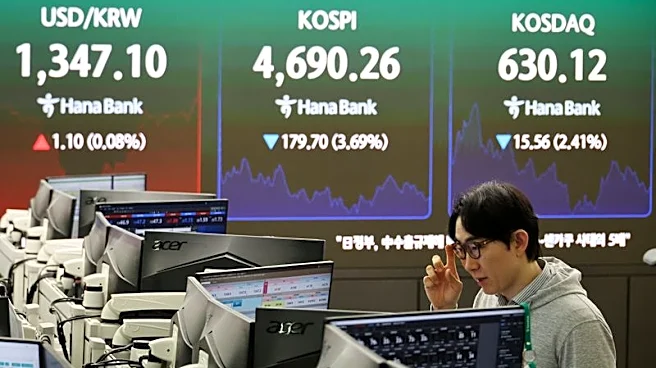
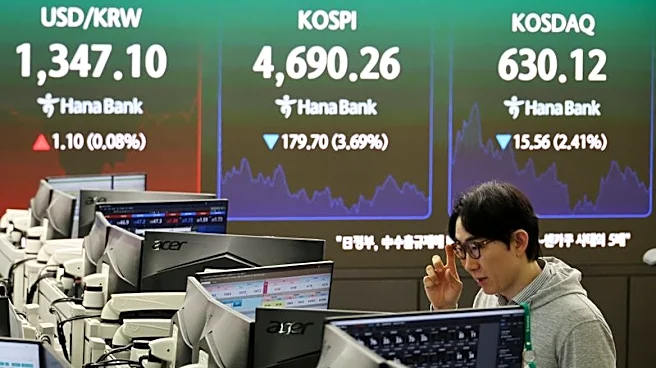
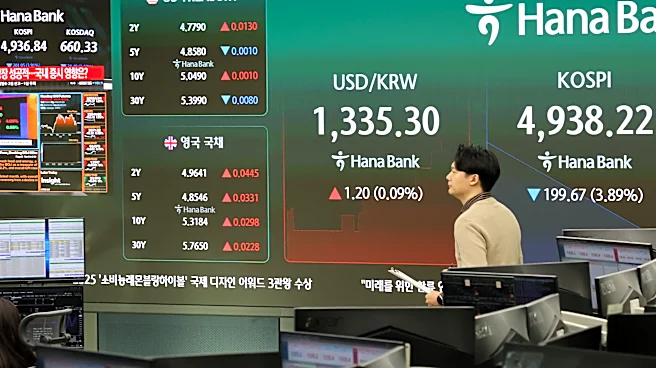
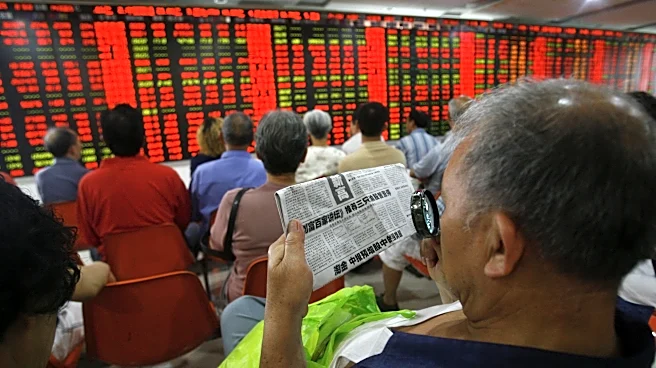
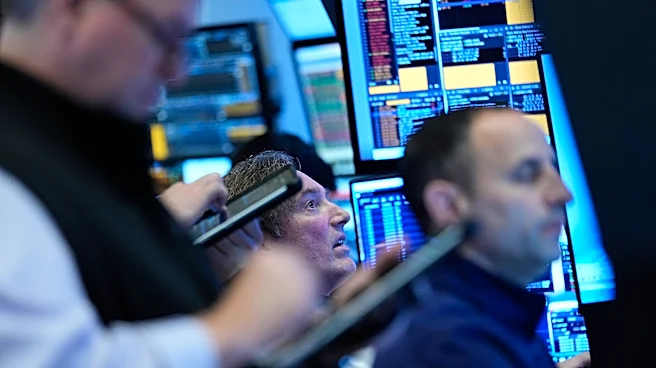
South Korea's Finance Minister Lee Hyoung-il announced on Monday that the government is prepared to stabilize its stock market if necessary, following a 5% drop in the KOSPI benchmark index. The decline was attributed to concerns over the AI trade and
a broader technology sector sell-off, overshadowing government assurances of deploying stabilization funds. Minister Lee stated at a press conference in Sejong that the volatility in the stock market has significantly expanded due to external uncertainties. He confirmed that authorities would decide whether to activate measures based on market conditions and are preparing to implement necessary steps at an appropriate time. This follows an earlier announcement on Sunday that market stabilization funds would be deployed immediately if conditions deteriorated, after the KOSPI reached a 10-month low last week. Despite projecting solid economic growth in the upper-3% range for next year, Lee warned of severe external risks, including regulatory uncertainty in the AI industry, geopolitical instability, and rising global interest rates.
Why It's Important?
The South Korean government's proactive stance on market stabilization is crucial for maintaining investor confidence and mitigating potential economic fallout. A significant drop in the KOSPI, driven by global tech sector concerns, highlights the interconnectedness of international markets. The potential for volatility in the semiconductor sector to amplify broader macroeconomic swings is particularly relevant, given South Korea's prominent role in global technology supply chains. The government's emphasis on cracking down on illegal short-selling and strengthening surveillance against unfair trading, rather than further deregulation, indicates a strategic effort to ensure market integrity. This approach could serve as a model for other nations facing similar market pressures, demonstrating a commitment to stability through regulatory enforcement and readiness to intervene with stabilization funds. The stability of South Korea's economy, Asia's fourth-largest, has broader implications for global trade and investment, especially in the technology sector.
What's Next?
South Korean authorities are poised to activate market stabilization measures as needed, depending on evolving market conditions. Finance Minister Lee Hyoung-il indicated that preparations are underway to implement tailored steps at an appropriate time. The government will continue to monitor external risks, including regulatory uncertainties in the artificial intelligence industry, geopolitical instability, and global interest rate fluctuations. There will be a continued focus on strengthening surveillance against unfair trading and cracking down on illegal short-selling, rather than pursuing additional deregulation. This strategy aims to prevent further market volatility and protect the integrity of the stock market. The effectiveness of these measures will be closely watched by international investors and could influence future policy decisions in other economies facing similar challenges.
Beyond the Headlines
The situation in South Korea underscores a growing global challenge: how governments can effectively manage market volatility driven by rapid technological shifts and geopolitical tensions. The KOSPI's decline, linked to AI trade concerns and a broader tech sell-off, illustrates the double-edged sword of technological advancement—while it drives economic growth, it also introduces new vectors for market instability. The government's decision to prioritize stricter enforcement against illegal trading over deregulation reflects a broader philosophical debate about the role of government intervention in free markets, particularly during periods of high uncertainty. This approach could set a precedent for how nations balance innovation with stability, potentially influencing international regulatory frameworks for financial markets and technology sectors. The long-term implications could include a re-evaluation of global investment strategies, with a greater emphasis on market resilience and regulatory oversight in key economic sectors.