








What's Happening?
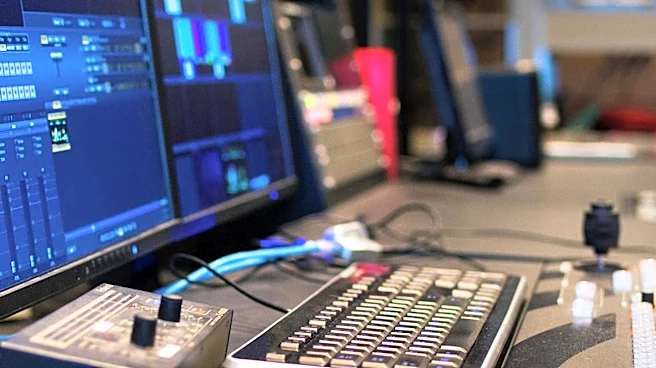
TV broadcasters are increasingly adopting remote, distributed, and hybrid production models to improve efficiency and make better use of specialized staff. This shift involves moving away from traditional, facility-bound control rooms to more flexible
environments that utilize IP-based KVM and control systems. These systems allow production teams to access resources from anywhere without sacrificing responsiveness. The transition is driven by the need for secure, low-latency access to equipment and resources, which is essential for maintaining the quality of live broadcasts. Companies like Matrox Video and IHSE USA are providing solutions that integrate on-premises equipment with virtualized or cloud processing utilities, enabling broadcasters to manage operations across multiple locations seamlessly.
Why It's Important?
The move to remote production models is significant as it allows broadcasters to reduce travel costs and improve the utilization of specialized staff. By adopting hybrid workflows, broadcasters can maintain high-resolution processes on-premises while leveraging IP for scalability and remote access. This transition is crucial for the industry as it faces financial constraints and the need to modernize infrastructure without a complete overhaul. The ability to operate efficiently across multiple sites while maintaining the quality of live broadcasts is a competitive advantage in the rapidly evolving media landscape. Broadcasters who successfully implement these models can enhance their operational flexibility and resilience.
What's Next?
As broadcasters continue to adopt remote production models, they will likely focus on integrating new technologies such as automation and artificial intelligence to further enhance efficiency. Improvements in network speeds and transport latency levels will make remote production more seamless, potentially eliminating the perceptible difference between local and remote operations. Broadcasters will need to ensure that their infrastructure can support these advancements while maintaining reliability in live environments. The ongoing transition will require careful management to avoid disruptions in production workflows, particularly as new technologies are introduced.
Beyond the Headlines
The shift to remote production models has broader implications for the media industry, including potential changes in employment patterns and the geographic distribution of talent. As physical location becomes less relevant, broadcasters may have more flexibility in hiring and deploying staff across different regions. This could lead to a more diverse and distributed workforce, with implications for labor markets and industry practices. Additionally, the reliance on IP-based systems raises questions about cybersecurity and the need for robust measures to protect sensitive data and ensure the integrity of broadcasts.