









What's Happening?
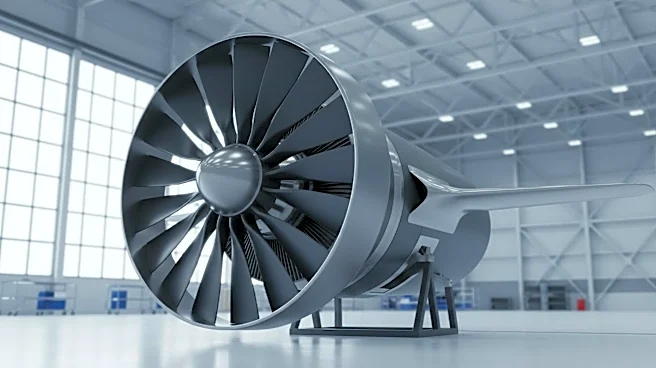
GE Aerospace is advancing its CFM International RISE open-fan technology demonstrator program by incorporating expertise from its UK subsidiary, Dowty. Dowty's involvement is crucial due to its extensive experience in propeller technology, which is essential
for the open-fan architecture that combines elements of both turboprop and turbofan designs. The RISE program aims to develop a more efficient and durable engine by utilizing a large, slow-moving fan that requires a different engineering approach compared to traditional turbofan blades. Dowty's history of producing composite propeller blades and its research into automated resin transfer molding technologies are key contributions to the program. The collaboration between GE and Dowty is expected to enhance the durability and efficiency of the RISE engine, with potential applications in both commercial and military aviation.
Why It's Important?
The collaboration between GE Aerospace and Dowty represents a significant step in the development of next-generation aviation technology. The RISE program's focus on open-fan architecture could lead to engines that offer improved fuel efficiency and durability, addressing some of the major challenges faced by the aviation industry. This development is particularly important as the industry seeks to reduce its environmental impact and improve the longevity of aircraft engines. The successful implementation of this technology could position GE and its partners as leaders in sustainable aviation solutions, potentially influencing future engine designs and setting new standards for efficiency and reliability.
What's Next?
As the RISE program progresses, further testing and development will be necessary to transition from a demonstrator to a full production engine. This will involve continued collaboration between GE, Dowty, and other partners to refine the technology and ensure its viability for commercial use. The program's success could lead to significant changes in the aviation industry, with potential shifts in workshare and production responsibilities among the involved companies. Additionally, the focus on durability and efficiency may drive further innovation in engine design, influencing future projects and collaborations within the aerospace sector.